

Media - News
Asia-Pacific Centre for Environmental Law and Sorbonne University Abu Dhabi Convene Global Symposium to Advance Sustainable Ocean Governance
On 14 October 2025, the Asia-Pacific Centre for Environmental Law (APCEL) at the National University of Singapore and Sorbonne University Abu Dhabi (SUAD) jointly hosted the international symposium “Ocean Futures: Advancing Decarbonisation and Innovation in Shipping and Marine Biodiversity through Law, Policy, and AI” at SUAD’s Al Reem Island campus, as part of the university’s Year of the Ocean initiative. This interdisciplinary event brought together experts from law, policy, and science to address pressing environmental challenges in the maritime sector. It convened policymakers, academics, international organisations, NGOs, and industry leaders from across the UAE and beyond to discuss how governance, technology, and innovation can jointly advance a sustainable future for the oceans.
Opening the symposium, Dr. Linda Yanti Sulistiawati, Senior Research Fellow at APCEL, and Professor Nathalie Martial-Braz, Chancellor of Sorbonne University Abu Dhabi, underscored the value of international collaboration in shaping effective legal and policy responses to the twin challenges of decarbonisation and biodiversity loss. Their remarks highlighted how the APCEL–SUAD partnership bridges regions and disciplines, translating academic research into actionable policy and industry insights.
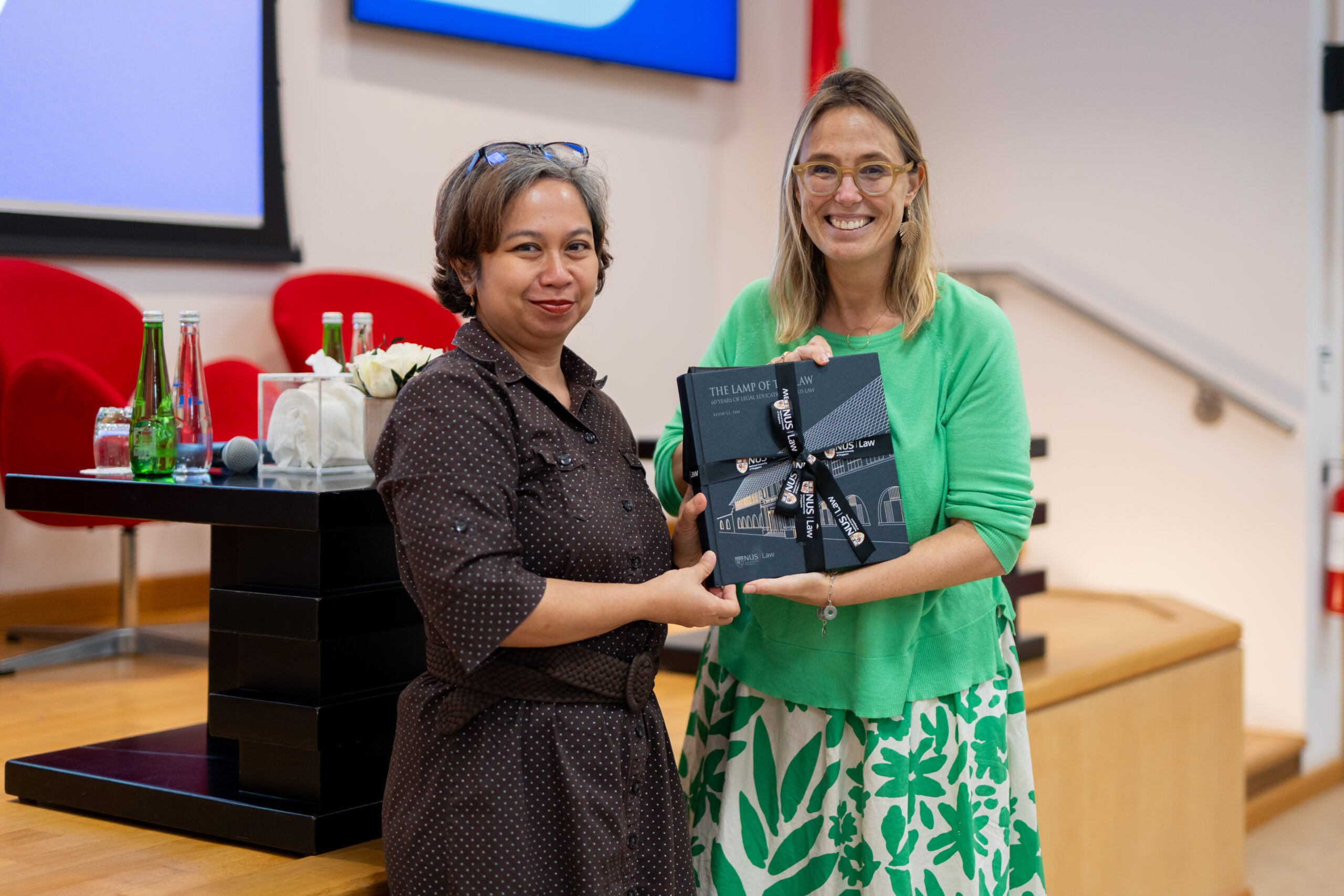
Distinguished keynote speakers included H.E. Hiba Al Shehhi, Acting Assistant Undersecretary for the Biodiversity and Marine Life Sector at the UAE Ministry of Climate Change and Environment, and H.E. Norbert Daniel Bärlocher, Senior Diplomatic Advisor at the Swiss Federal Office for the Environment.
H.E. Al Shehhi highlighted Abu Dhabi’s growing role as a regional hub for sustainability and environmental leadership, noting how platforms such as the IUCN and the Ocean Futures symposium demonstrate the emirate’s potential to foster meaningful international dialogue on marine and climate challenges.
H.E. Bärlocher reflected on Switzerland’s experience in global environmental negotiations, sharing insights into the challenges and opportunities of building consensus on emerging biodiversity frameworks such as the Biodiversity Beyond National Jurisdiction (BBNJ) Treaty. Together, their remarks set the tone for an engaging interdisciplinary exchange on advancing sustainable ocean governance through law, policy, and cooperation.
The programme featured three thematic panels examining the regulatory and technical dimensions of sustainable ocean governance.
Panel 1: Decarbonisation in the Shipping Industry
During Panel 1 of the Decarbonization of the Shipping Industry conference, moderated by Dr. Linda Yanti Sulistiawati of APCEL (National University of Singapore Law), the discussion centered on the multifaceted legal, policy, and industry challenges in transitioning maritime transport toward net-zero emissions.
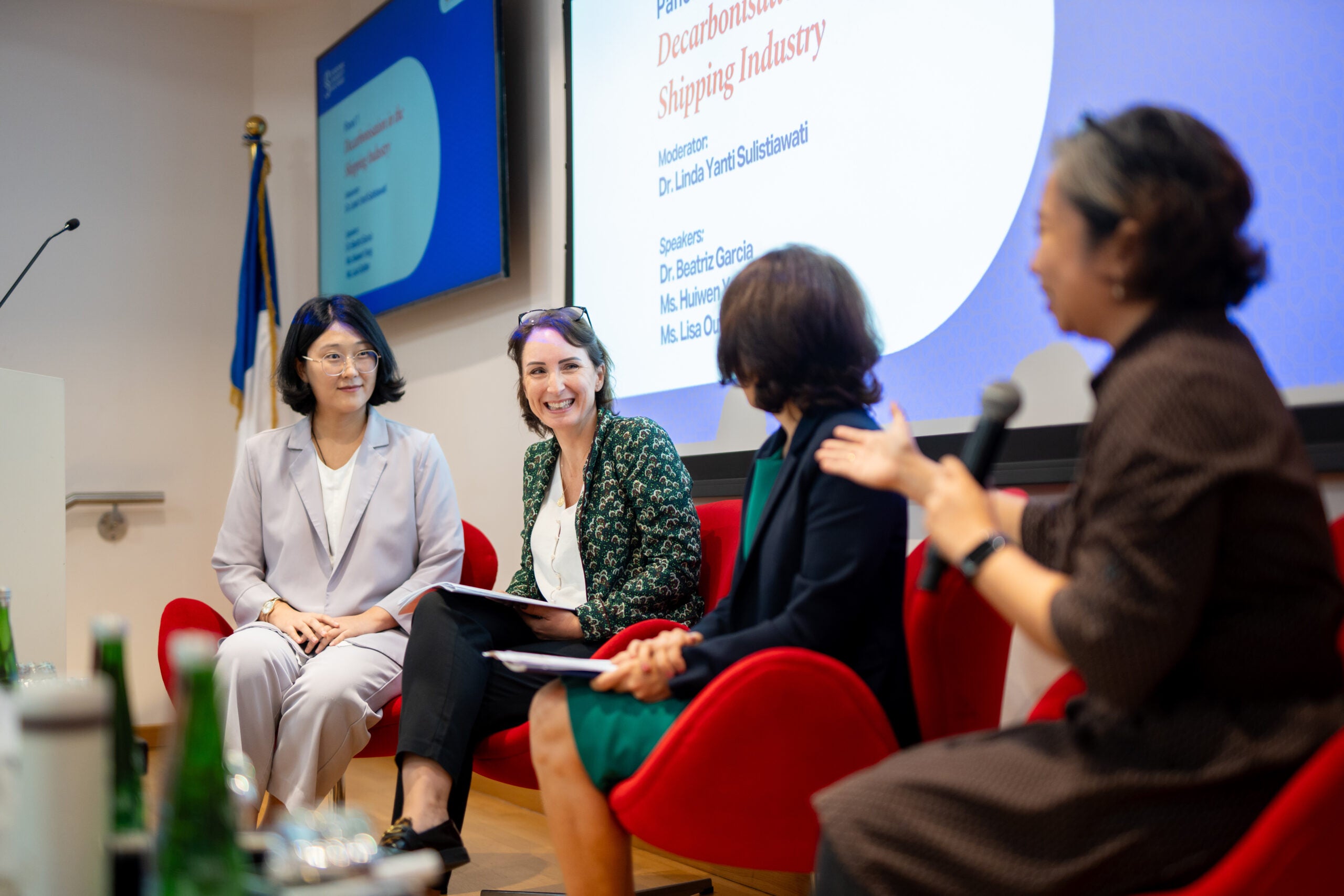
Dr. Beatriz Garcia from Sorbonne University Abu Dhabi opened the session by examining international legal frameworks governing maritime emissions, particularly the role of the IMO and its evolving regulatory instruments. She emphasized the need for stronger enforcement mechanisms and greater alignment between global climate goals and maritime law.
Yang Huiwen from APCEL (NUS Law) followed with a critical analysis of the IMO regime specifically in relation to the principle of Common But Differentiated Responsibilities and Respective Capabilities-CBDR RC. Her presentation underscored the legal complexities of implementing the fairness measurement in the decarbonization of the shipping industry.
Liza Outtier from CMA-CGM Group provided an industry perspective, detailing the company’s decarbonization strategies, including investments in alternative fuels, digital optimization of routes, and partnerships for green innovation. She candidly addressed the operational and financial hurdles faced by shipping companies, especially in balancing competitiveness with sustainability.
The panel concluded with a dynamic Q&A and open discussion, where participants engaged with the speakers on topics such as the feasibility of zero-emission vessels, the role of port authorities, and the potential for regional cooperation. Dr. Sulistiawati facilitated the dialogue, drawing connections between legal theory and practical implementation, and encouraging interdisciplinary collaboration to accelerate the sector’s climate transition.
Panel 2: Shipping and Marine Biodiversity Protection
Building on earlier discussions of decarbonization, the second panel broadened the lens of maritime sustainability to encompass marine biodiversity protection. Moderated by Yang Huiwen, Research Associate at the APCEL, the session examined how international law, policy, and industry practices intersect to mitigate ecological impacts from global shipping operations.
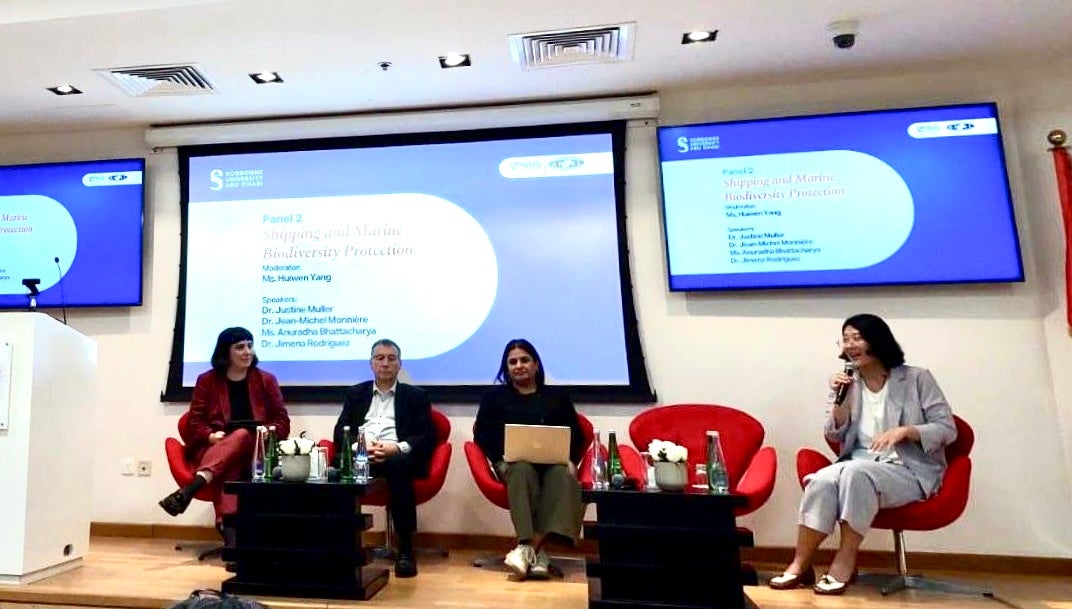
Dr. Justine Muller, Post-Doctoral Fellow at APCEL, opened with an overview of shipping’s key biodiversity pressures—ranging from invasive species to pollution and anchoring. She highlighted existing IMO frameworks, including the Ballast Water Management Convention, Biofouling Guidelines, and MARPOL, as critical mechanisms for managing these impacts, while calling for stronger coordination and enforcement. Her discussion of Particularly Sensitive Sea Areas (PSSAs) illustrated how targeted legal designations can translate into tangible ecosystem protection.
Dr. Jean-Michel Morinière, Senior Counsel at Al Aidarous Law Firm and lecturer at Sorbonne University Abu Dhabi, followed with a legal reflection on the emerging BBNJ Treaty. He explored its potential “hard” and “soft” law effects on the IMO regime, especially concerning underwater noise and area-based management, and emphasized the importance of avoiding overlap between international instruments. Dr. Morinière noted that the treaty’s reaffirmation of the “common heritage of mankind” principle may reshape how shipping law integrates biodiversity protection within UNCLOS frameworks.
Anuradha Bhattacharya from the MENA Oceans Initiative concluded the session by presenting the Ocean Health Roadmap—a pioneering regional framework designed to address multiple stressors such as ship speed, underwater noise, and biofouling. She highlighted the roadmap’s focus on voluntary, incentive-based approaches to engage ports, shipping companies, and charterers in biodiversity-positive practices.
The panel concluded with a lively Q&A and open discussion. Participants exchanged views on how international legal tools, industry innovation, and regional cooperation can converge to make shipping both sustainable and biodiversity-conscious. It was a dynamic dialogue where academia and industry came together to explore practical solutions for protecting marine biodiversity and advancing a nature-positive maritime future.
Panel 3: AI and Robotics for Marine Biodiversity and Climate Nature-Based Solutions
Moderated by Dr. Justine Muller, Post-Doctoral Fellow of APCEL, the third panel explored how emerging technologies, such as AI, robotics, and data-sharing, are reshaping marine biodiversity conservation and supporting climate-related nature-based solutions. The discussion brought together voices from science, law, and technology to examine how innovation can strengthen ocean stewardship under international governance frameworks.
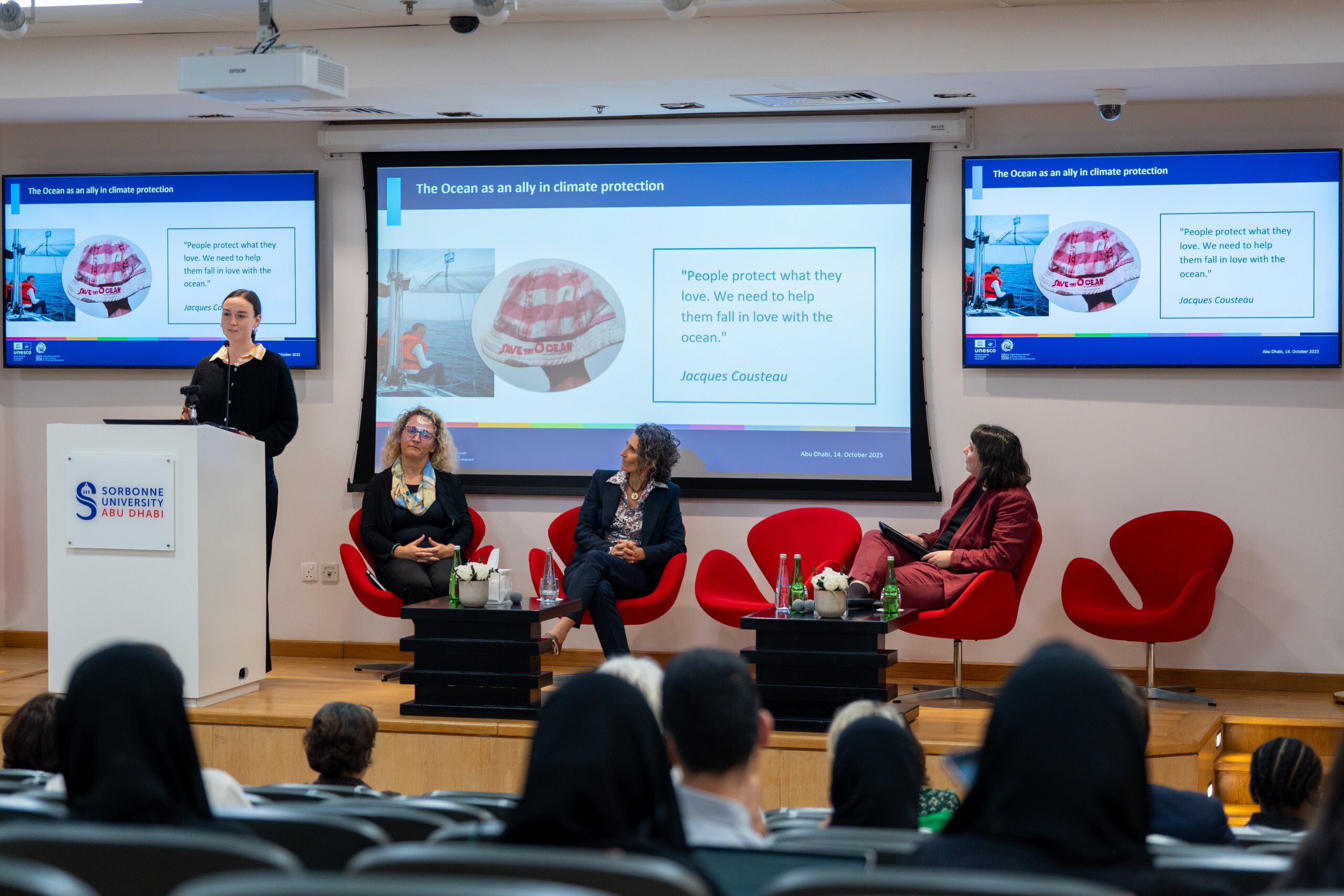
Dr. Giulia De Masi, Associate Professor at Sorbonne University Abu Dhabi, opened with insights on using AI and robotics to better understand and preserve the ocean—of which less than 5% has been explored. She highlighted the importance of FAIR data (findable, accessible, interoperable, reusable) and presented innovations such as autonomous underwater vehicles and robotic swarms that can map and monitor marine habitats. She noted that machine learning is already improving forecasting, optimizing operations, and enhancing real-time ecosystem monitoring.
Laura Meyer, Stakeholder Coordination Officer at the UN Ocean Decade (IOC-UNESCO), emphasized the need to close the global ocean data gap through stronger public–private collaboration. She outlined initiatives that encourage companies to share ocean data collected through their operations, noting that greater transparency not only drives innovation and efficiency but also strengthens marine environmental management.
Dr. Ada Natoli, Assistant Professor at Zayed University and conservation geneticist, concluded the session with an ecological perspective on technology’s role in biodiversity protection. Drawing from her research on dolphins and whales in the Arabian Gulf and Indian Ocean, she highlighted how combining molecular ecology with AI-assisted monitoring helps track populations, guide conservation, and strengthen marine biodiversity protection.
The panel concluded with an engaging Q&A and open discussion, where participants reflected on how technology, law, and ecology can converge to advance a more data-driven and inclusive model of ocean governance. It was a lively exchange where scientists, policymakers, and industry representatives came together to explore how digital innovation can help secure a resilient future for marine biodiversity.
By fostering dialogue across disciplines and sectors, the symposium reaffirmed the shared commitment of APCEL and SUAD to advancing sustainable ocean governance through law, science, and collaborative innovation.
Related Links:
- [APCEL-Sorbonne Symposium] Ocean Futures: Advancing Decarbonisation and Innovation in Shipping and Marine Biodiversity through Law, Policy, and AI
- [APCEL PP-2502] Ocean Futures: Advancing Decarbonisation and Innovation in Shipping and Marine Biodiversity