

Media - News
(Translation) Middle East Conflict Fuels Energy Security Concerns; Over 50 Countries Expected at World’s First Conference on Transitioning Away from Fossil Fuels (中东战火催生能源焦虑 料50多国赴全球首届脱离化石燃料会议), Lianhe Zaobao (26 Apr 2026)

(Discussions on phasing out fossil fuels are among the central issues at the 30th United Nations Climate Change Conference (COP30). According to analysis by the Kick Big Polluters Out coalition, one in every 25 COP30 participants was a fossil fuel lobbyist, drawing criticism from environmental advocates. (Photo: Cai Weiqian))
Renewed conflict in the Middle East has intensified global concerns over energy security, as sharp fluctuations in energy prices set the backdrop for the First International Conference on Transitioning Away from Fossil Fuels. Representatives from more than 50 countries, including Singapore, are expected to attend a high-level meeting in Colombia.
The six-day event opened on April 24 in Santa Marta. The intergovernmental conference is jointly hosted by the governments of Colombia and the Netherlands, with its final two days designated as a high-level segment. Lianhe Zaobao has reached out to Singapore’s Ministry of Sustainability and the Environment for details regarding its participation.
At the conference’s opening press briefing, Colombia’s Minister of Environment and Sustainable Development, Irene Vélez Torres, stated that 56 countries would participate in the high-level segment and that China, the United States, and Russia would not attend. Participating countries are expected to jointly prepare a report outlining the contributions each party is prepared to make toward transitioning away from fossil fuels.
Discussion of fossil fuel phase-out was one of the central agenda items at the 30th United Nations Climate Change Conference (COP30). More than 80 countries called for the development of a roadmap to phase out fossil fuels; Singapore was not among them.
An earlier draft of the COP30 resolution reportedly included language referring to a “transition away from fossil fuels,” but the wording was removed from the final adopted text, prompting dissatisfaction among several countries. COP30 President Ambassador André Aranha Corrêa do Lago later announced during the closing session that a roadmap addressing the transition away from fossil fuels would be developed. The inaugural International Conference on Transitioning Away from Fossil Fuels is intended to provide guidance for that roadmap.
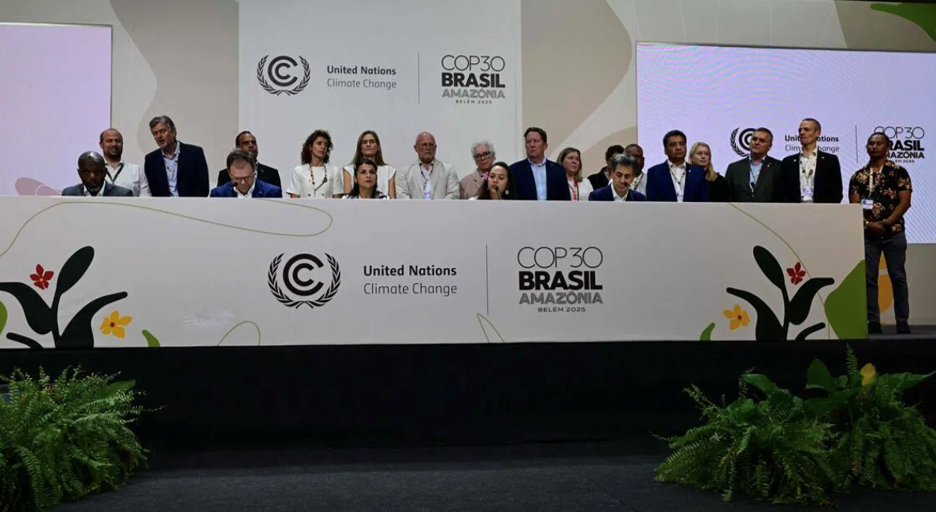
(On 18 November 2025, ministers and climate envoys from multiple countries, among other representatives, held a press conference at COP30, calling on society to phase out fossil fuels. (Photo: AFP))
First, participants are committed to advancing the transition away from fossil fuels, and discussions will focus on implementation rather than persuading one another of the need to phase out fossil fuels.
Second, the conference will be science-based and proceeds from the shared view that accelerating the transition away from fossil fuels is necessary to achieve climate goals, while safeguarding human rights and addressing the interconnected environmental crises of climate change, biodiversity loss, and pollution.
Third, discussions will prioritize practical and actionable solutions rather than approaches that may delay the pace of the energy transition.
UN Climate Framework Unable to Reach Consensus on Transition Away from Fossil Fuels
Associate Professor Jolene Lin, Director of the Asia-Pacific Centre for Environmental Law at the National University of Singapore, said in an interview that the conference on transitioning away from fossil fuels is an intergovernmental initiative operating outside the United Nations Framework Convention on Climate Change (UNFCCC) framework, as the Convention framework has thus far been unable to generate consensus on transitioning away from fossil fuels.
“Countries also recognise that such discussions do not necessarily need to proceed exclusively within the UNFCCC framework. The inaugural conference will test participating countries’ willingness and readiness to move from commitments toward action on phasing out fossil fuels,” she said.
Bill Hare, Chief Executive of international climate science and policy research organisation Climate Analytics, said that increasingly frequent extreme weather events, together with global energy disruptions associated with renewed conflict in the Middle East, have made discussions on phasing out fossil fuels particularly significant. He said the conference could help accelerate prioritisation of zero-carbon energy development.
“The Middle East conflict has contributed to higher fossil fuel prices, underscoring the urgency of the global energy transition. Accelerating the deployment of renewable energy, expanding electrification, and improving energy efficiency remain among the most effective safeguards against geopolitical disruption,” Hare said.
Hare added that Singapore, as a global maritime hub, is positioned to take a leading role in maritime decarbonisation and could play an important role in advancing the transition away from fossil fuels. He also noted that achieving net-zero emissions in Singapore’s energy sector would depend in part on measures such as importing low-carbon electricity and therefore require continued international cooperation.
“A healthy international multilateral system remains critically important to Singapore. This conference provides an opportunity to engage with like-minded countries and contribute to maintaining and strengthening a rules-based international order,” he said.
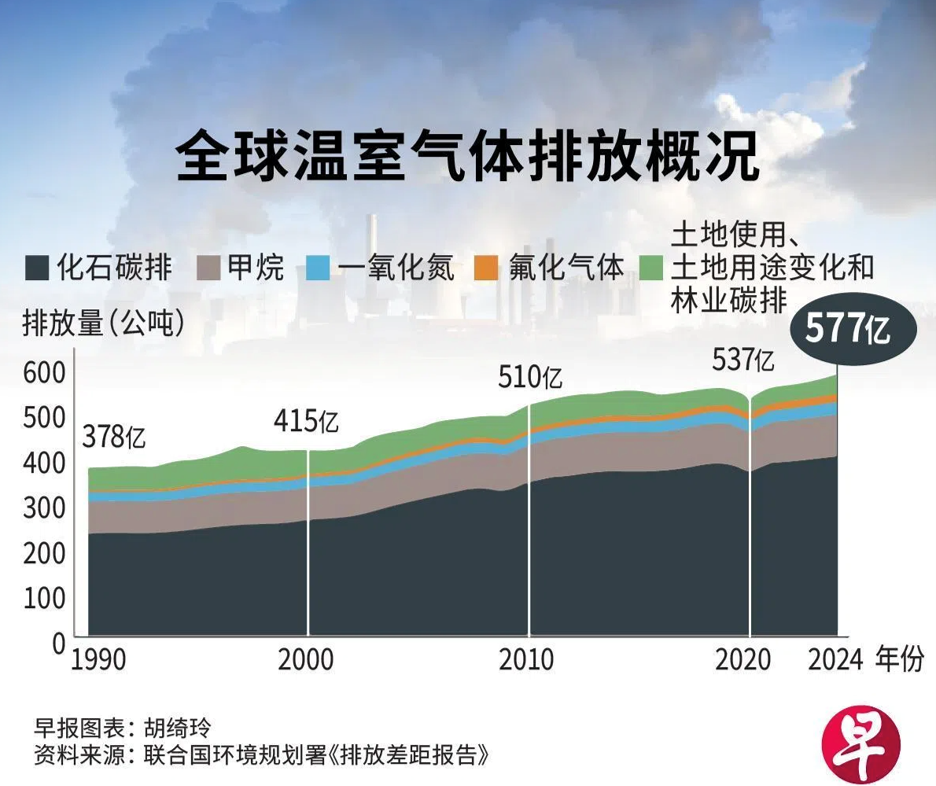
(Global greenhouse gas emissions reached 57.7 billion tonnes in 2024, an increase of 2.3 per cent year-on-year, with the rate of emissions growth exceeding the average annual pace recorded during the 2010s by more than fivefold and setting a new historical high.
Fossil fuels remain the principal source of global greenhouse gas emissions. Current projections indicate that, by the early 2030s, the increase in global average temperatures is expected to exceed the 1.5 degrees Celsius threshold that the international community has sought to limit warming to.)
Encouraging Participation by Major Fossil Fuel Producers and Consumers Remains a Challenge
On what outcomes the inaugural conference should seek to achieve, Dr Lin said that continued momentum in discussions among participating countries would itself represent progress, even if countries are not yet prepared to endorse the complete phase-out of fossil fuels.
“If participating countries are willing to support the conference process and sustain institutional engagement, that would already be movement in the right direction,” she said.
She also expressed hope that the conference would reaffirm that phasing out fossil fuels benefits not only the environment but also public health and global energy security.
“At the same time, the challenge will be how to encourage broader participation, especially from major fossil fuel-producing and consuming countries,” she said.
A second conference is tentatively scheduled to take place within one year and is expected to be hosted in Tuvalu. Some commentators, however, argue that such meetings divert resources from the deployment of renewable energy and may ultimately undermine environmental objectives.
Responding to that criticism, Dr Lin said that accelerating renewable energy deployment is essential, but expanding renewables does not automatically result in the phase-out of fossil fuels.
“The argument that efforts to phase out fossil fuels divert resources is a familiar one, but it is not persuasive. It is like promoting exercise as part of a healthy lifestyle while neglecting the need to address diet,” she said.
Published: 26 April 2026 at 18:12 on Lianhe Zaobao: https://www.zaobao.com.sg/news/singapore/story20260426-8951474
Translated by Yang Huiwen, Research Associate at APCEL