

Media - News
(Translation) UN Climate Convention Faces Nearly S$36 Million Budget Shortfall; Singapore Among Few Countries to Pay on Time (气候公约预算缺口近3600万元 新加坡是少数如期拨款国), Lianhe Zaobao (11 Aug 2026)
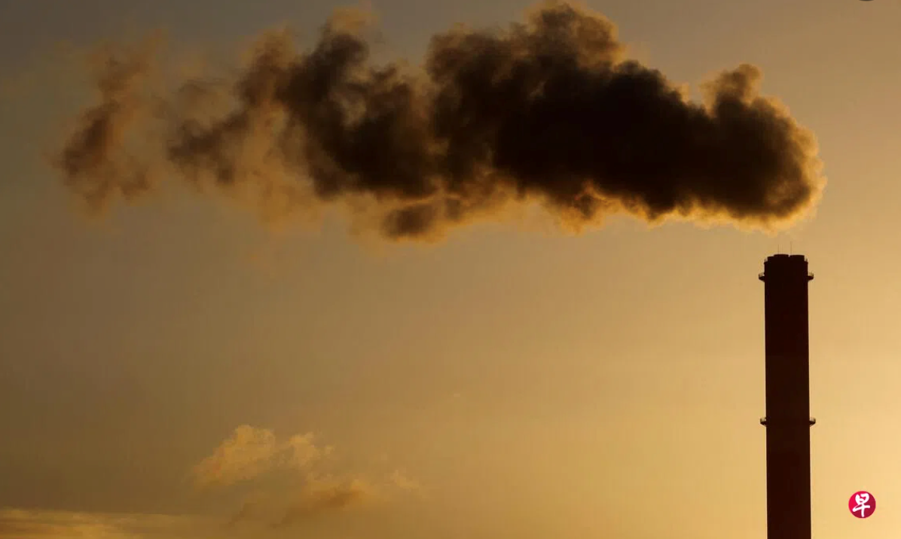
Global greenhouse gas emissions (GHGs) reached 57.7 billion tonnes in 2024, up 2.3 per cent from 2023, with emissions rising at more than five times the average annual rate recorded during the 2010s. Global warming is expected to breach the 1.5°C limit set under the Paris Agreement by the early 2030s. (Reuters)
Parties to the United Nations Framework Convention on Climate Change (UNFCCC) are required to contribute €41.1 million (about S$60.56 million) to the Convention’s core budget this year. But as of mid-May, the UNFCCC secretariat had received less than 40 per cent of the amount due. Only 50 countries had made their payments on time, with Singapore among them.
According to the latest core budget report released by the UNFCCC secretariat, only €16.8 million, or 39 per cent of this year’s total core budget, had been received as of May 15. Of the Convention’s 198 Parties, 148 had yet to make their contributions, leaving €24.3 million (about S$35.8 million) outstanding.
Singapore paid its assessed contribution of €189,456 for this year on schedule. Responding to queries from Lianhe Zaobao, a Singapore government spokesperson stressed that Singapore takes its international obligations seriously, and that making timely contributions to the core budget is a basic responsibility of Parties, ensuring that the UNFCCC secretariat can operate in a stable, predictable and effective manner.
The spokesperson said Singapore is a strong supporter of the multilateral system and, as a small island state highly vulnerable to climate change, considers well-functioning international frameworks essential to advancing collective global action. Ensuring that the UNFCCC is adequately funded is therefore crucial to the smooth conduct of climate negotiations and the implementation of global climate action.
The UNFCCC draws up its budget every two years. It consists of a core budget funded through contributions that Parties are required to make, as well as supplementary funding provided voluntarily by countries. The core budget supports the negotiation process, institutional development and assistance to developing countries. Each country’s assessed contribution is calculated according to an established United Nations scale, taking into account its economic capacity. The supplementary budget, meanwhile, supports activities not covered by the core budget.
Associate Professor Linda Yanti Sulistiawati, a senior Research Fellow at the Asia-Pacific Centre for Environmental Law (APCEL) at the National University of Singapore (NUS), told Lianhe Zaobao that paying core budget contributions on time is not merely an administrative obligation, but a foundation for ensuring the proper functioning of the multilateral system.
She noted that a shortfall in the core budget would intensify cash-flow pressures, which could in turn affect staffing and project implementation, and could even force the UNFCCC to cut expenditure.
“Singapore’s full and timely payment of its core budget contribution underscores its reliability and respect for multilateral commitments. More importantly, it helps strengthen trust in cooperation, because climate cooperation is built not only on ambition, but also on whether countries actually fulfil their established responsibilities, including their financial obligations.”
Singapore Contributed More Than S$70,000 to UNFCCC Non-Core Funding
In addition to their contributions to the core budget, Parties may also make voluntary contributions to the UNFCCC’s non-core funding.
At the 30th United Nations Climate Change Conference (COP30) last year, Minister for Sustainability and the Environment Grace Fu announced that Singapore would contribute to the UNFCCC’s non-core budget to support developing countries in establishing more transparent frameworks, helping to ensure transparency in their progress towards meeting climate targets.
A Singapore government spokesperson said the country contributed S$75,000 to the non-core budget last year. The funding was used to support developing countries in building the data systems and reporting mechanisms required for transparency frameworks, helping them fulfil their commitments under the Paris Agreement.
Linda pointed out that the Enhanced Transparency Framework is intended to help countries track progress in climate action, build trust and, in turn, strengthen collective action. However, developing countries need substantial resources to implement the new framework, ranging from continuous data collection to the development of technical and institutional capacity.
“Contributions from countries such as Singapore to support the Enhanced Transparency Framework demonstrate both a willingness to show solidarity and recognition of differences in countries’ capacities. Such funding will help promote the transparency needed for countries to deliver on their climate efforts.”
As for Singapore’s contribution to the non-core budget this year, the government said the matter is still under assessment. Factors being considered include the specific needs of the UNFCCC secretariat, as well as areas that Singapore wishes to support and where it can add value.
COP31 Expected to Focus on Finance and Transparency Mechanisms
COP31 is scheduled to take place in Antalya, Türkiye, from Nov 9 to 20 this year. A Singapore government spokesperson said the country will send a delegation to the conference and is preparing to set up a Singapore Pavilion at COP31. This will be the fifth consecutive year that Singapore has had a pavilion at the annual climate conference.
Linda noted that while Türkiye will host COP31, Australia will hold the presidency of the negotiations. “This is unprecedented and could create confusion,” she said.
She added that previous climate conferences have focused on issues such as financing gaps and geopolitical tensions. COP31, she expects, will place greater emphasis on how to accelerate the implementation of climate targets, as well as on strengthening climate finance and transparency mechanisms.
Published: 11 August 2026 at 17:06 on Lianhe Zaobao by Cai Weiqian: https://www.zaobao.com.sg/news/singapore/story20260811-9396309
Translated by Yang Huiwen, Research Associate at APCEL