

Media - News
Empowering Youth for Climate Action at LCOY 2026
On 19 September 2026, APCEL’s Senior Research Fellow, Dr. Linda Yanti Sulistiawati participated in the Local Conference of Youth (LCOY) 2026 held at the Global Indian International School (GIIS), where she engaged with young climate leaders through two key sessions focused on climate governance, law, and action. Her participation reflected APCEL’s shared commitment to strengthening climate literacy and empowering youth to play a more active role in shaping climate solutions at local, national, and international levels.
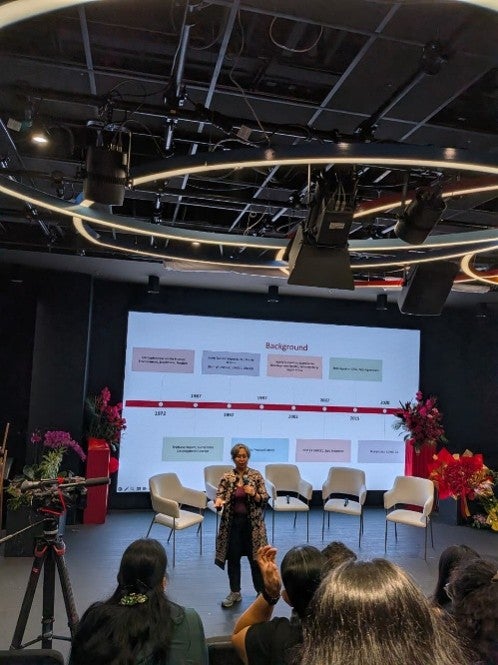
Dr. Sulistiawati, lectured on Climate Change Crash Course during LCOY 2026, 19 September 2026.
In the first session, Climate Change Crash Course, Dr. Sulistiawati introduced participants to the foundations of climate change law and governance. She highlighted the importance of understanding the principal legal instruments that shape global climate action, including international agreements, national regulations, and policy frameworks that guide climate negotiations. Emphasizing that climate discussions are not limited to governments and experts, she encouraged young delegates to see themselves as important stakeholders in climate governance. The session explored practical pathways for youth engagement, from participating in climate dialogues and advocacy initiatives to contributing to community-based climate action and policy development.

Dr. Sulistiawati, APCEL’s SRF in the Expert Panel Discussion during LCOY 2026.
Dr. Sulistiawati also joined the Expert Forum, alongside Dr. Aniq Ahsan of MOYA Analytics and Tim Wedemeyer of Jones Lang LaSalle Inc. The panel examined the various pressures that climate change places on people, institutions, and climate action efforts. Drawing on her recent research on subnational climate regulations in Indonesia and the Philippines, Dr. Sulistiawati discussed how local governments are often on the frontlines of responding to climate impacts. She emphasized the need to strengthen local institutions and empower community stakeholders with adequate legal, financial, and governance capacities so they can continue taking effective climate action even when facing increasing climate-related challenges. Her message underscored the critical role of local leadership in building climate resilience and delivering meaningful, long-term solutions.