

Media - News
(Translation) Post-2030 Development Projects Draw Attention; Government Reaffirms Commitment to Balancing Growth and Nature Conservation (2030年后发展项目引关注 政府重申确保发展与自然保育平衡), Lianhe Zaobao (29 Nov 2025)
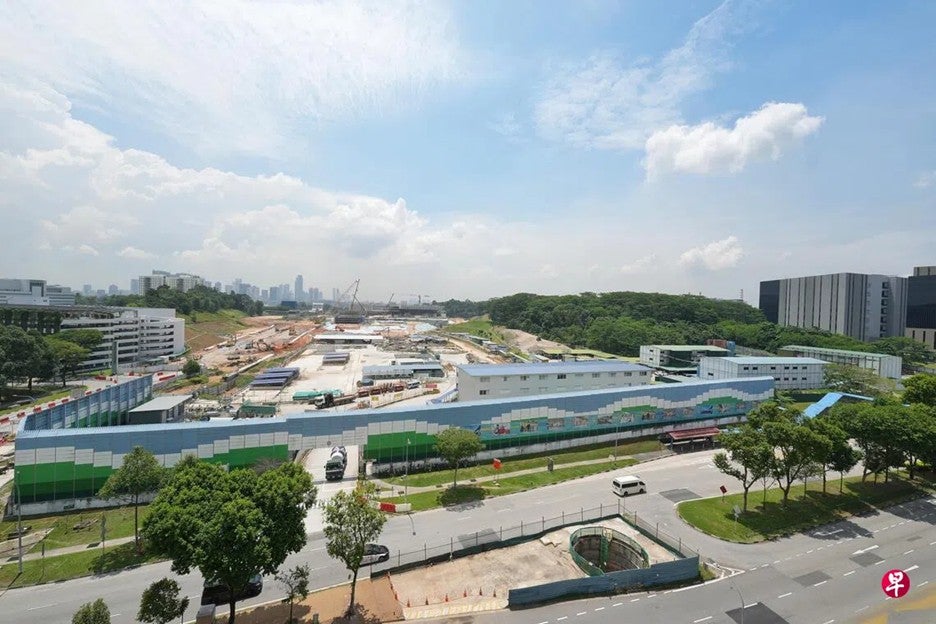
The “Woodlands Gateway” project, jointly developed by JTC Corporation and other government agencies, is expected to continue until 2035 and includes the construction of new building foundations and superstructures. The project may require the clearing of approximately 10.4 hectares of woodland. (Photo by Xie Zhiyang)
As social needs continue to grow and evolve, some development projects in Singapore may only commence after 2030 and could require the removal of trees. These plans have attracted public attention, with some commentators suggesting that they run counter to Singapore’s pledge to halt deforestation by 2030. In response, the Ministry of National Development emphasized that any decision to proceed with development must be based on rigorous trade-off assessments and studies of alternatives. Singapore, it said, will continue striving to balance sustainable development with conservation.
In 2021, more than 100 countries, including Singapore, issued a joint statement in support of the Glasgow Leaders’ Declaration on Forests and Land Use, committing to halt deforestation by 2030 and to provide funding for forest protection and restoration.
In response to media queries, the Ministry said Singapore’s support for the Glasgow Declaration reflects its commitment to sustainable urban development and the protection of natural heritage. “We take our commitment to safeguarding our natural heritage seriously. Guided by our vision of becoming a ‘City in Nature,’ Singapore actively conserves key biodiversity areas, enhances habitats, and strengthens ecological resilience.”
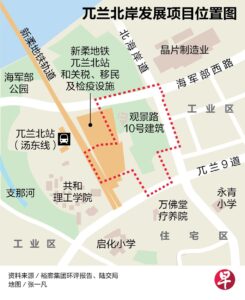
However, as societal needs continue to evolve, some ongoing development projects will extend beyond 2030, while others may only begin after 2030. For example, the “Woodlands Gateway” project — jointly developed by JTC Corporation and other government agencies — is expected to continue until 2035. The works include the construction of new building foundations and superstructures. The project may require the clearing of approximately 10.4 hectares of woodland, though the specific timeline for tree removal has yet to be determined.
Nasry, Executive Director of the environmental group Singapore Youth Voices for Biodiversity, said in an interview with Lianhe Zaobao: “If Singapore continues clearing forests, does this run counter to the vision of a ‘City in Nature’? Since an international commitment has been made, it should be honored.”
Dr. Justine Muller, a postdoctoral research fellow at the Asia-Pacific Centre for Environmental Law at the National University of Singapore, also argued that since the Glasgow Declaration explicitly states that forest loss should be significantly reduced by 2030 at the latest, all deforestation activities should cease by 2030.
Nevertheless, the declaration also states that individual countries may continue to pursue sustainable development. Dr. Muller said, “Singapore still retains the discretion to decide how to balance environmental protection with social and economic development.”
Environmental Advocates: Resources Should Focus on Areas of Higher Conservation Value
Nasry agreed that striking a balance between conservation and development is particularly challenging in land-scarce Singapore. He believes that resources should be concentrated on protecting areas with higher conservation value, and that land currently occupied by golf courses — which are used by only a small segment of the population — should be freed up.
“Many young people are concerned about housing and hope to own a home without having to wait too long. We must weigh conservation against development and determine which is more important.”
Dr. Muller noted that 145 countries support the Glasgow Leaders’ Declaration on Forests and Land Use, and that these countries account for about 91% of the world’s forest area. If the commitment to halt deforestation is fulfilled, it could benefit humanity in multiple ways — from reducing carbon emissions to preventing biodiversity loss.
“However, the declaration lacks the clarity and legal force typically found in multilateral environmental agreements. For example, it does not set specific targets, nor does it require countries to submit reports, which limits the ability to assess its effectiveness.”
Ministry of National Development: The Evolving Needs of Present and Future Generations Must Be Considered
Singapore currently sets aside 7,800 hectares of land for nature reserves, nature parks, and other green spaces, accounting for about 10% of the country’s total land area. The Ministry of National Development (MND) said there are plans to expand green spaces by a further 1,000 hectares over the next 10 to 15 years.
However, given Singapore’s land scarcity and lack of hinterland, national development faces inherent constraints. The Ministry stated: “While protecting green spaces is important, we must also take into account the evolving needs of present and future generations of Singaporeans, including housing, jobs, infrastructure, and national defence.”
The authorities noted that many existing vegetated areas were originally used for agriculture and other human activities, with vegetation subsequently regenerating over time. A number of these sites are dominated by cultivated plants and non-native species.
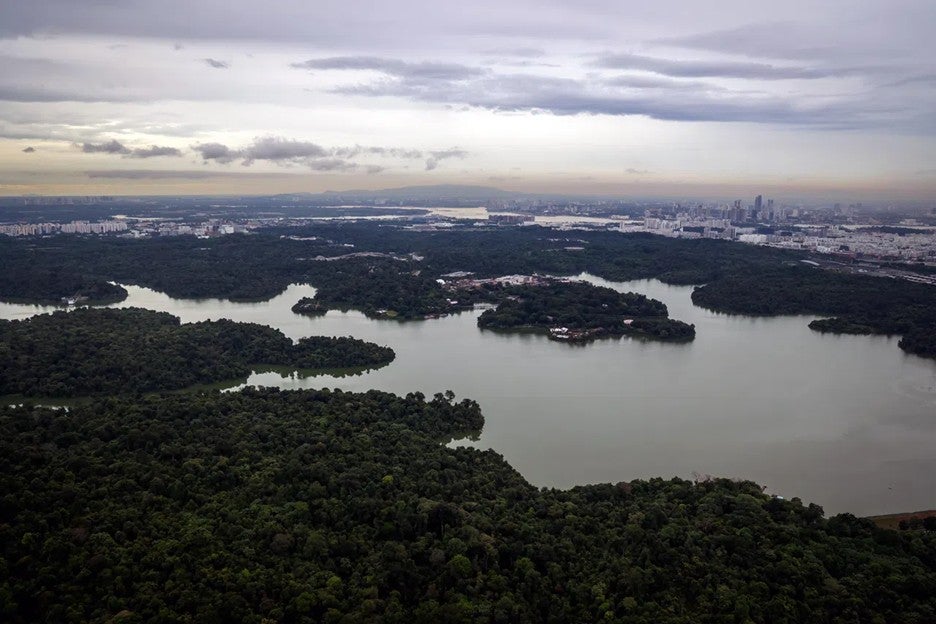
Singapore currently sets aside 7,800 hectares of land for nature reserves, nature parks, and other green spaces, accounting for about 10% of the country’s total land area. The authorities plan to expand green spaces by a further 1,000 hectares over the next 10 to 15 years. (Photo by Ye Zhenzhong)
“We also conduct ecological profiling to better understand how designated sites provide refuge for local biodiversity and enhance ecological connectivity, so as to inform upstream, long-term planning for future generations.”
The Ministry reiterated that, given limited resources, some vegetated sites will inevitably have to be developed to meet land-use needs. Nevertheless, any development decision will be subject to rigorous trade-off assessments and alternative studies, including evaluations of ecological and biodiversity value, alongside the implementation of appropriate mitigation measures.
By Cai Weiqian
Published: November 29, 2025, 8:21 pm on Lianhe Zaobao: https://www.zaobao.com.sg/news/singapore/story20251129-7557241
Translated by Yang Huiwen, Research Associate at APCEL