
Highlights

[CALS] Bicentennial Lecture on the Rule of Law with Chief Justice Sundaresh Menon
Join Chief Justice Sundaresh Menon for the Bicentennial Lecture on the Rule of Law, “Evolving Conceptions of the Rule of Law: The Singapore Experience,” on 2 September 2026 at NUS Law. The lecture explores Singapore’s evolving understanding of the rule of law amid globalisation, geopolitical change, and artificial intelligence, followed by a discussion session and lunch reception.
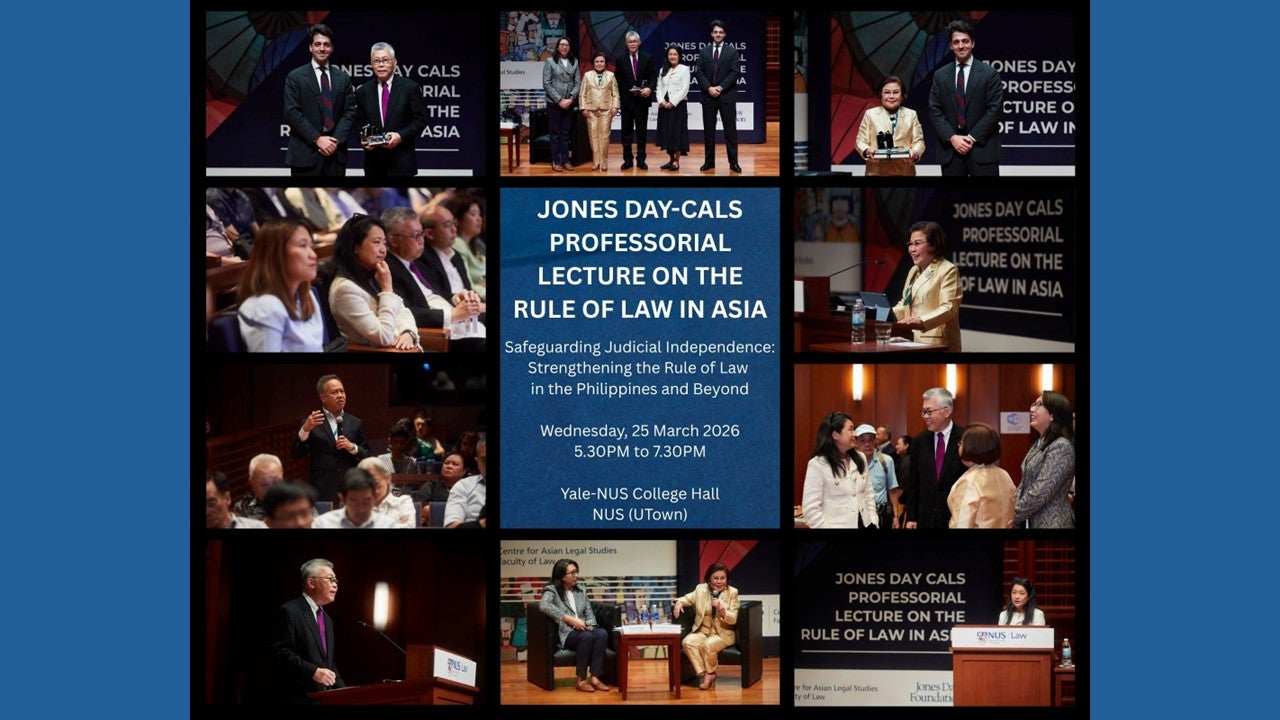
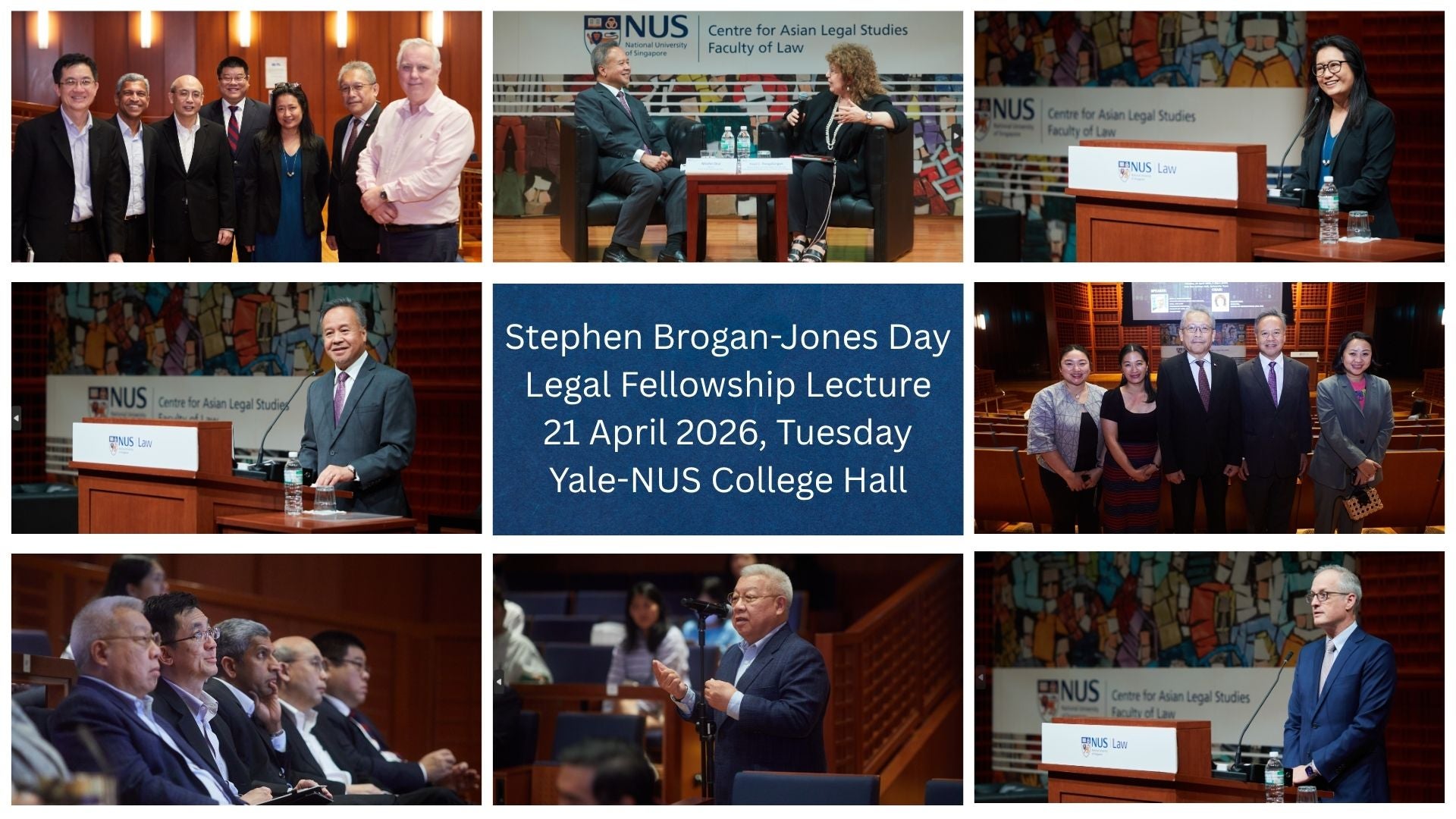
[CALS] Stephen Brogan-Jones Day Legal Fellowship Lecture: Do International Courts Matter? International Law and Governance in a Turbulent Time
CALS hosted the Stephen Brogan–Jones Day Legal Fellowship Lecture on the Rule of Law, delivered by Raul C. Pangalangan. The lecture examined the role of international courts in global governance, dispute resolution, and maintaining the rule of law amid geopolitical uncertainty.
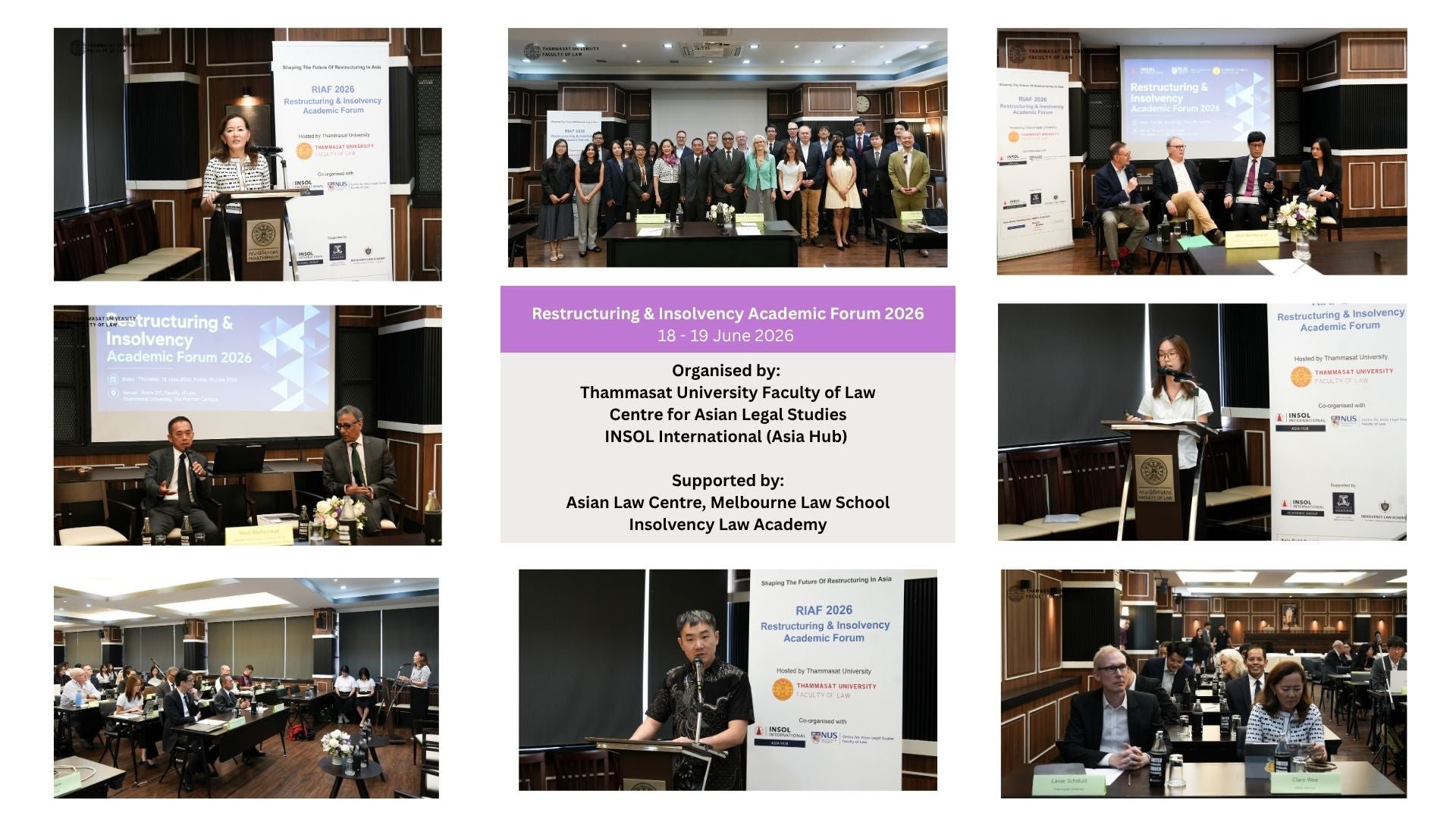
Following the success of its inaugural edition, the second Restructuring & Insolvency Academic Forum (RIAF) was held in Bangkok on 18–19 June 2026. Co-organised by CALS, the Forum featured keynote addresses, six expert panels, and 17 papers from 11 jurisdictions. It also marked the first inclusion of undergraduate presenters, reflecting RIAF’s commitment to nurturing future insolvency scholars. RIAF 2027 will be hosted by the University of Sydney.