

Media - Global News
GCGC 2026: Thought leaders meet at NUS Law-hosted prestigious conference
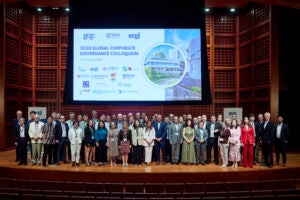
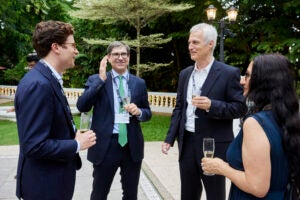
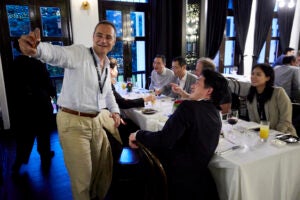
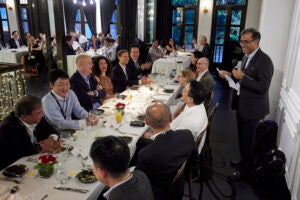
Singapore became the centre of global business strategy in June 2026, as the world’s most prestigious corporate governance conference took place at the National University of Singapore Faculty of Law.
NUS Law, through the EW Barker Centre for Law & Business, played host to the 2026 Global Corporate Governance Colloquium (GCGC) from 12 to 13 June, bringing together the best research across law, economics and finance. Because the annual colloquium rotates among only 12 leading global universities—including Harvard, Oxford and Tokyo—hosting it is a once-in-a-decade milestone.
Showcase of Academic Leadership

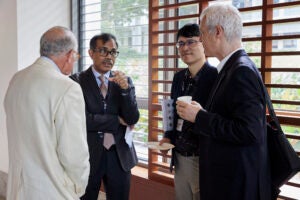
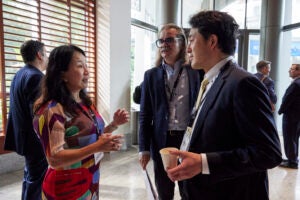
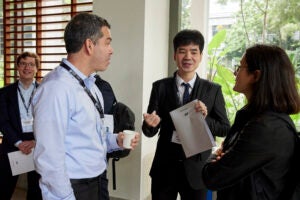
The success of GCGC 2026 highlighted the deep bench of expertise within NUS Law. The conference was masterfully steered by prominent NUS Law academics, showcasing the Faculty’s role as an intellectual bridge between Western and Asian corporate governance frameworks. The tone was set on Day 1 by Professor Ernest Lim ’02, who delivered the formal opening welcome remarks, while Professor Umakanth Varottil Phd ’10 helmed the summit as Conference Chair.
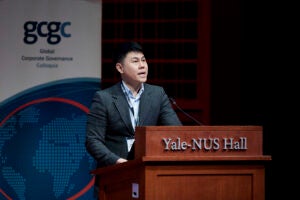
Professor Varottil said, “Hosting the Global Corporate Governance Colloquium 2026 at NUS Law marked an important moment for the Faculty as well as its EW Barker Centre for Law & Business. The Colloquium brings together many of the world’s leading legal and finance scholars in corporate governance, and it is an exceptional forum for new research and serious debate. Since NUS Law has the opportunity to host it only once in 12 years, the event offered a rare occasion to welcome this remarkable community to Singapore, and to highlight the Faculty’s contribution to corporate law and governance scholarship in Asia and globally.”
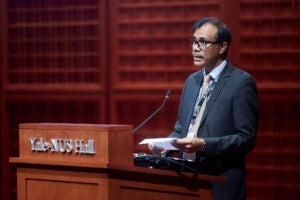
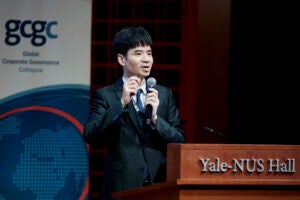
Throughout the intensive schedule, NUS faculty members drove the intellectual debate. Associate Professor Lan Luh Luh ’89 chaired an engaging session on proxy voting and shareholder voice, guiding cross-border discussions, while Assistant Professor Kenneth Khoo ’15 acted as an expert paper discussant, contextualising the quantitative data presented on global ownership trends. Also in attendance were NUS Law’s Professor Hans Tjio, Director of the EW Barker Centre for Law & Business which provided financial support, and Associate Professor Lin Lin LLM ’06 Phd ’10.
Said Assistant Professor Khoo, “GCGC gave me a rare opportunity to interact with many of the leading scholars in corporate governance beyond the presenters, panellists and discussants. I am deeply appreciative of the effort so many participants made to come to Singapore, battle the jet lag, and contribute to such a collegial and intellectually stimulating conference.”
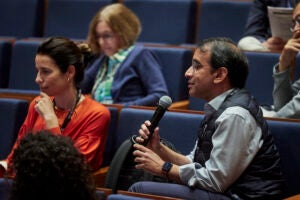
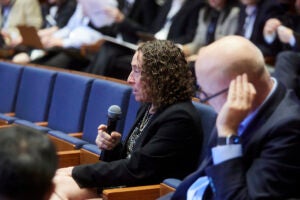
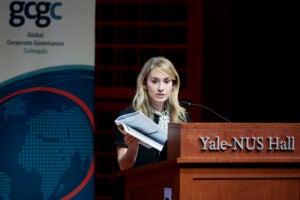
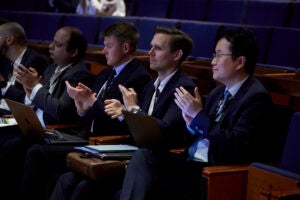
Where Theory Meets Market Reality
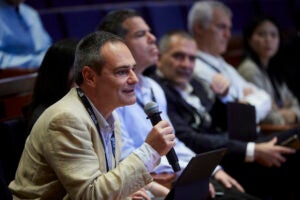
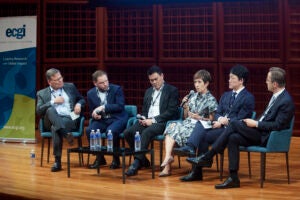
Co-organised with the European Corporate Governance Institute (ECGI), GCGC 2026 united top tier global minds across three disciplines to dissect how modern corporations are run, regulated and reimagined. Though it functioned as a rigorous “academic-to-academic” powerhouse, GCGC 2026 also provided a platform to tie academic theory to real-world capital market mechanisms. This synergy was evident during the first day’s headline panel, “The Political Economy of Global Stock Exchange Competition”, which brought together executives from the London Stock Exchange, Tokyo Stock Exchange and SGX RegCo.
Research and Debates on Corporate Governance
Over the course of eight intensive sessions across two packed days, the colloquium confronted systemic market issues that are actively redefining international commerce. Broadly, it dealt with the following topics through in-depth discussions:

- Boardroom geopolitics
Scholars tackled corporate national identity and polarising dynamics in the session topic “BlackRock Exceptionalism in the Geopolitics of Proxy Voting”, evaluating how global asset managers navigate state pressures.
- Controlling shareholders
A major spotlight was thrown onto controllers, assessing the structural vulnerabilities and protections required in markets dominated by block holders.
- Capital markets and indexation
Academics dissected the global rise of index-based ownership, common ownership, and how retail choice in proxy voting is shifting power dynamics.
- External governance
Thought leaders discussed the EU Sustainability Due Diligence Directive and its profound ripple effects on corporate structures worldwide.
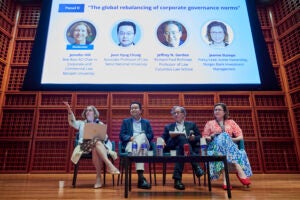
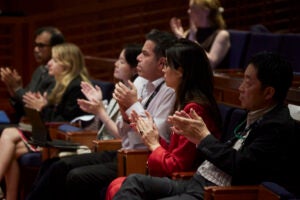
The Colloquium concluded with the presentation of the Best Papers in the ECGI Working Paper Series Awards, which were accepted by Assistant Professor Jakub Hajda (HEC Montréal), Professor Luca Enriques (Bocconi University) and Professor Roy Shapira (Reichman University).
With the close of the immensely successful GCGC 2026, the international corporate governance community prepared for its next destination: Yale Law School in New Haven in the US, for June 2027.


About GCGC
The Global Corporate Governance Colloquia is a global initiative to bring together the best research in law, economics and finance on corporate governance, held annually at 12 leading universities in the Americas, Asia, and Europe. The 12 hosting institutions are:
Columbia University, Harvard University, Imperial Business School, National University of Singapore, Peking University, Seoul National University, Stanford University, Stockholm University, University of Oxford, University of Tokyo, Yale University and Goethe University Frankfurt (Leibniz Institute for Financial Research SAFE and DFG LawFin Center).
The aim of the conference series is to attract current research papers of the highest scholarly quality in the field of corporate governance. The conferences are primarily “academic to academic” events with some participants from industry and the public sector including the practitioner partners of GCGC and other invited panellists. Japan Exchange Group is a Practitioner Partner.
Professor Erik Lidman, Director of the Swedish Corporate Governance Institute, will serve as Chair of the Global Corporate Governance Colloquia for the next two years, alongside Vice-Chairs Professor Ok-Rial Song (Seoul National University) and Professor Jennifer Hill (Monash University).