

Media - News
From NUS to Yale: Navigating the Global South discourse
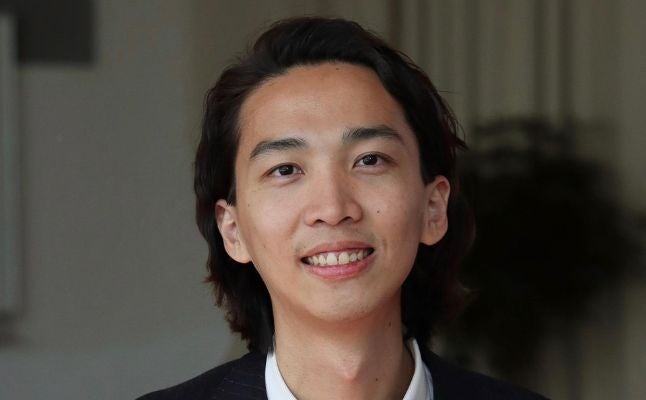
As a new cohort of doctoral minds prepares to join the National University of Singapore Faculty of Law (NUS Law), we celebrate an achievement that underscores the world-class calibre of our research community. Huang Fan PhD ’28, a second-year PhD student at NUS Law, has been awarded the prestigious Fox International Fellowship at Yale University for the academic year 2026/2027.
The Fellowship is a highly competitive graduate student exchange programme between Yale and a select network of only 20 world-renowned partner institutions. It targets outstanding individuals who demonstrate not just academic excellence, but a profound commitment to being “citizen scholar ambassadors”—researchers whose work offers practical insights into pressing global challenges. Fan will spend 10 months in residence at Yale’s Whitney and Betty MacMillan Center for International and Area Studies starting in August 2026.
This is the second time that an NUS Law PhD student has been awarded the Fellowship. Selected in her third year of doctoral studies, Dr Cheng Pangyue PhD ’24 is currently a Global Academic Fellow of the Faculty of Law at the University of Hong Kong.
Crossing Continents
Fan’s academic pedigree spans continents. The Guangxi native has an LLB from China University of Political Science and Law, a Diploma from the University of Lisbon, an LLM from the University of Macau, and an LLM from Leiden University. His professional experience includes having served as a tribunal secretary in international arbitration, interned at the United Nations, and provided research assistance at multiple law schools.
During his studies, Fan became exposed to and developed a keen interest in the topic of North-South relations within international law. “While preparing to apply for my PhD, I came across the scholarship of Professor Antony Anghie from NUS Law concerning Third World Approaches to International Law (TWAIL)”, he shared. He proceeded to delve into relevant literature with his reflections on the latest developments of international law, which eventually shaped his research proposal. Providing the broader context of his research topic, he elaborated, “In recent years, many Global South countries traditionally labelled as “developing” have had their development status called into question. This topic matters because it leads to many legal debates and policies that have an impact on our everyday lives.”
Fan’s research explores what the term “developing country” means when used in international dispute settlement. In particular, he explores how and in whose interest the division between developing and developed countries has been used for legal reasoning in international adjudication. While this topic spans multiple fields, his PhD research focuses on international economic law, particularly on international trade and investment disputes.
Coming to Singapore
When choosing where to anchor his doctoral work, Fan chose Singapore. “My research adopts a Global South perspective, which resonates with the prevalent concerns within Asia where Singapore is located,” he explained. “However, NUS is far more than just an Asian institution. As the Former Dean of NUS Law, Professor Tommy Koh, put it, ‘it is where civilisations of the world meet and co-mingle’. Consistent with this vision, the Faculty draws eminent scholars from every corner of the world.”
Refining a topic of this magnitude requires a delicate balance of intellectual freedom and rigorous testing, paired with the input of diverse perspectives. Fan noted that the research culture at NUS Law provided the perfect launchpad, challenging him early on through a first-year methodology course where research questions face scrutiny that “may parallel, if not exceed, the intensity of a formal viva”. This rigorous process helped him to refine his research question before the Doctoral Candidacy Qualification Exam at the beginning of the second year. In addition, Fan pointed out the frequent academic conferences, seminars, and workshops by well-known scholars that kept him abreast of developments in the field, as well as the excellent campus facilities.
This environment, alongside a supportive peer community and weekly Doctoral Research Workshops, was the foundation that Fan sought for his research into public international law.
Next: North America
The journey to Yale will be an extension of Fan’s relentless academic exploration. He is also looking forward to immersing himself in a completely new academic tradition: Yale is the birthplace of the “New Haven School” approach in international law, which treats international law not as a set of static rules, but a dynamic process.
Aside from leveraging Yale’s academic resources to improve his research, Fan sheds light on how the research culture at Yale will be beneficial to his future academic path: “I look forward to refining my own research through a dialogue of diverse perspectives. Scholars from different educational and cultural backgrounds can offer suggestions that we might never have considered. Both NUS Law and the Fox Fellowship provide the ideal environment for this kind of intellectual exchange.”
When asked what being a “citizen scholar ambassador” means to him on a day-to-day level, Fan’s answer is surprisingly grounded. Though it relates to expanding and sustaining civic discourse, he broke it down into simple terms: “I believe these ideals advocated by the Fox Fellowship are not just abstract concepts but living principles that find expressions in everyday actions. Sometimes it may just mean taking the extra step to offer detailed feedback to a peer’s draft paper. I hope to contribute to these ideals by trying my best in my research every day, being a supportive colleague, bringing joy and being helpful to individuals around me, and making contributions to the community.”
Message to Future Peers
As Fan embarks on strengthening the discourse of the Global South in international dispute settlement in relation to the increasingly debated “developing country” label, he remembers the road he took in refining his research project. To those applying for the PhD programme, he shared, “A research proposal goes a long way in shaping not just the application outcome, but also the quality of their dissertation later. Therefore, applicants may find it rewarding to dedicate effort to refining their proposals.”
For prospective PhD students looking to anchor their legal research, Fan’s academic journey highlights how NUS Law serves as the ultimate launchpad for legal academics.
Click here for more information on the Doctor of Philosophy Programme.