

Media - News
Law with a heart: Celebrating NUS Pro Bono Group’s legacy
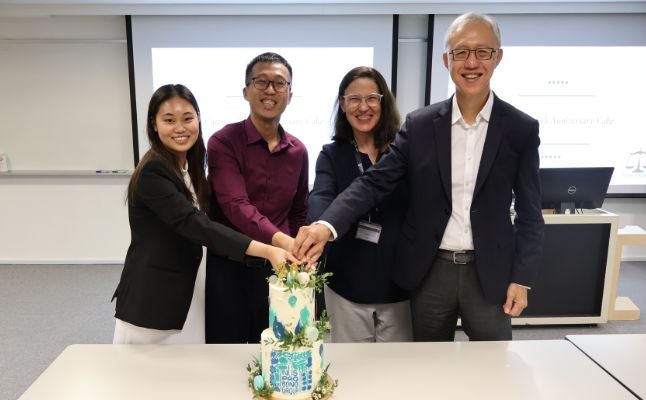
Some legacies aren’t written in legislation or court records, but in lives changed and minds inspired. The story of the NUS Pro Bono Group (NUS PBG) is one with such a legacy–sparked by student passion and shaped by professors who believed that the law should serve the public good.
Law students have been doing pro bono work since 1959, when students at the then-University of Malaya assisted the Legal Aid Bureau. In the 1990s, a handful of passionate NUS Law students became involved in pro bono work when they volunteered at prison facilities and children’s homes.
As student interest grew, so did the need for a formal platform–one that could sustain these efforts and weave pro bono work into the fabric of legal education at NUS Law. In 2005, under Professor Tan Cheng Han, SC’s then-deanship, that vision came to life with the launch of the student-initiated NUS PBG–Singapore’s first student-run pro bono group. This was a bold step at a time when pro bono work was not yet a part of mainstream legal education.

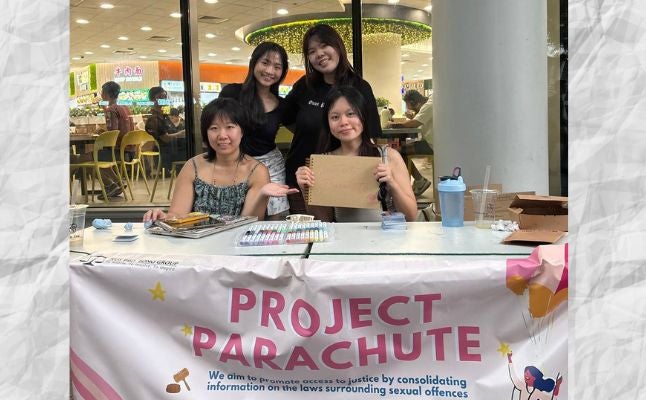
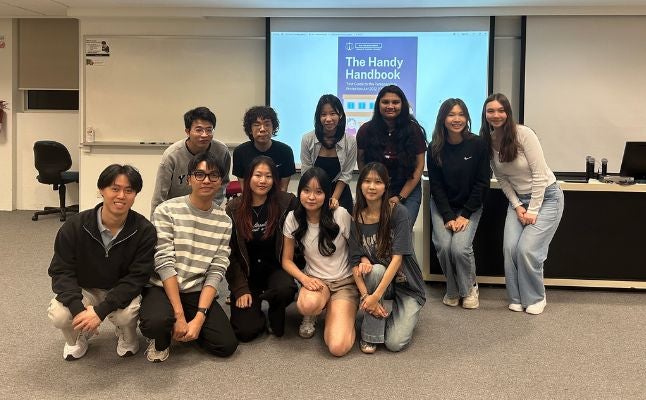
NUS PBG has just celebrated 20 years of student pro bono efforts, and two decades on, pro bono work and community work has become a cornerstone of the NUS Law undergraduate experience. The Faculty has a number of student-led pro bono groups who receive support from NUS Law professors and the NUS Law Centre for Pro Bono and Clinical Legal Education. Today, NUS PBG remains the largest student-run pro bono initiative in the country with over 240 students championing access to justice every year, working with migrant workers, at-risk youth, and many other underserved communities across 10 projects, including FIDReC, Syariah Law Friends and the Legal Education & Awareness Programme (LEAP). Pro bono work has also become mandatory for students in all three law schools in Singapore.
To mark the 20 year Anniversary of PBG’s founding, Prof Tan ’87 reflects on the challenges and evolution of student pro bono work, and how NUS PBG has made a lasting impact on legal education at NUS Law and in Singapore.
1. How did the idea of a Pro Bono Group at NUS Law first come about?
This was a student-led idea. It began when Joseph Wong ’06, then a final-year law student, approached me with the idea of starting a student pro bono initiative within NUS Law. I had little hesitation agreeing as exposing students to pro bono cases has many advantages. These include defining the type of lawyer we want our students to be and giving them the exposure to practical problems that lawyers have to face in practice. It also showcases how meaningful the law can be, which we hope will instil pride in our students for the profession they will become a part of.
The initial idea was that this would be led by the school’s management. Instead, I challenged the student to make it a student-led initiative, with supervision from one of our faculty, Associate Professor Helena Whalen-Bridge LLM ’02. My experience with NUS Law students is that they are creative, enterprising and idealistic. I had great confidence that if they embraced this approach, the activity would be a success, and that taking ownership of such an initiative was also an opportunity for them to learn and grow as individuals. They did not disappoint me. Assoc Prof Whalen-Bridge has reported that students embody the developments I envisioned, and that allowing students to identify legal need in the community has had a lasting impact.

2. What were some of the challenges the students faced when doing pro bono work then and what kind of impact has NUS PBG made on Singapore’s legal landscape?
Pro bono work was in its infancy up till the turn of the century, especially compared to where it is today. While there were groups of lawyers who engaged in pro bono work, it was not something that was emphasised—the Criminal Legal Aid Scheme initiated by the Law Society of Singapore being a notable exception.
NUS Law was the only law school in Singapore when NUS PBG was established. Student involvement in pro bono work had been somewhat minimal before NUS PBG, with activities largely stemming from personal connections with particular lawyers who did some pro bono work. Under the Legal Profession Act, only qualified lawyers can give legal advice, so when NUS PBG was established, it was crucial for the students to establish partnerships with lawyers and appropriate organisations to work collaboratively with.
I facilitated some of the initial connections and recall that one of the first collaborations NUS PBG established was with the Association of Women for Action and Research (AWARE). The students worked as research assistants with AWARE to prepare a paper for the Singapore Parliament on possible legislation to criminalise child sex tourism. This eventually led to the enactment of Section 376C of the Penal Code that made it a crime for a citizen or permanent resident of Singapore to have commercial sex with a minor outside Singapore. This initial project gave the students confidence that they could make a difference and led to many other collaborations, such as with the then-Pro Bono Services Office of the Law Society (now PBSG), the State Courts, and the Legal Aid Bureau.
NUS Law was also fortunate that Assoc Prof Helena Whalen-Bridge agreed to be the Faculty Advisor to the students. Her wise guidance and dedication over the past 20 years have been crucial to NUS PBG’s success.
3. How has the legal profession’s pro bono landscape evolved over the years?
Prior to becoming Dean of NUS Law in 2001, a senior judge whom I liked and respected cautioned that pro bono initiatives could be seen as pushing against established norms or “activism”, even if they were just ensuring access to justice.
That said, this perception has shifted over time. Today, pro bono work is widely recognised and even institutionalised, with practising lawyers being encouraged to take up more of such cases to help those in need and even government support for community legal clinics.
Over time, the NUS PBG also gained recognition as a vital part of the legal education at NUS, one that fosters a culture of community service and civic responsibility among law students. The benefits of pro bono work on the development of law students are so well-established today that it has been made compulsory for all law students in Singapore to complete at least 20 hours of pro bono work! I have no doubt that it was the success of NUS PBG that led to this outcome and contributed to the change of mindset.
4. Tell us more about the increasing importance of student-led initiatives in bridging the access-to-justice gap and empowering the next generation of lawyers to take on social responsibility.
Most societies are likely to have some access-to-justice gaps and Singapore is no exception. Engaging in pro bono work while in university sensitises students to the plight of those who cannot easily afford legal advice. It also makes them more aware of the opportunities in this space and the positive difference they can make as future members of the profession. All these set the foundation for members of the legal profession to continue to contribute meaningfully to the social fabric of Singapore. I am confident that NUS PBG and the legacy it has built will continue to influence future generations of law students to be engaged in helping the less able have better access to justice.
Please click here to learn more about NUS PGB’s projects and the communities they serve.
This story was first published on 29 May 2025 on NUS News. Click here for more NUS News stories.