

Media - News
Distinguished Visitor Lecture: Rethinking Standing and the Beneficiary Principle in Trusts Law
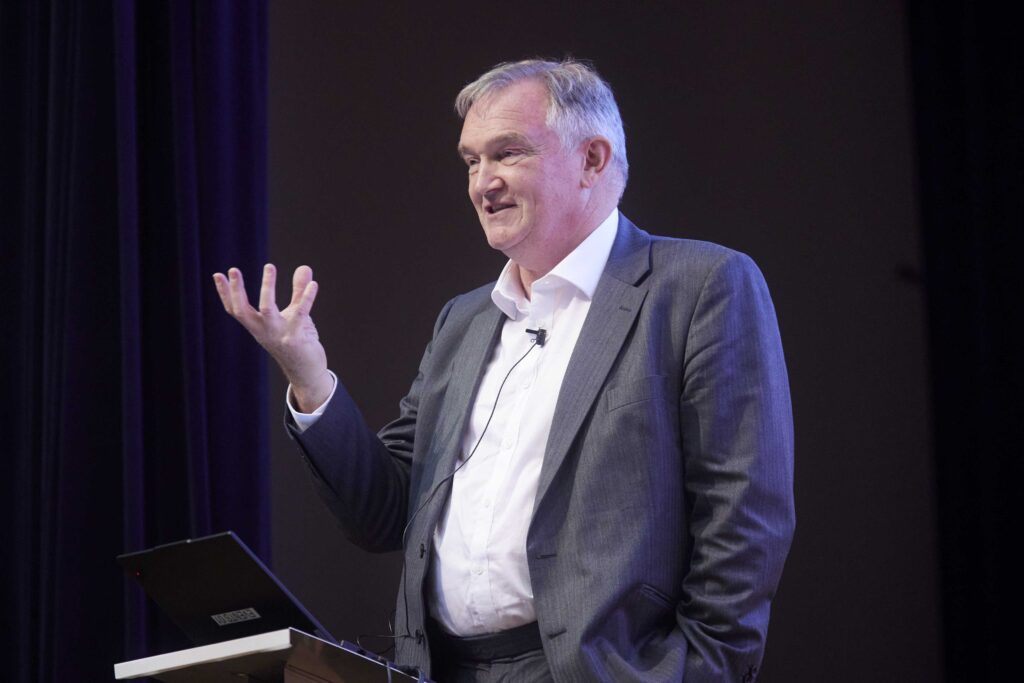
In a stimulating evening, the EW Barker Centre hosted a Distinguished Visitor Lecture by Professor Charles Mitchell KC (Hon). Held on 10 March 2026, and moderated by Professor Steven Elliott KC, the lecture drew on collaborative work with Dr Jessica Hudson and offered an analytical preview of their forthcoming article in the Law Quarterly Review.
At the heart of the lecture was a reconceptualisation of standing in private law. Far from being a purely procedural gateway, standing was defined as a set of powers enabling parties to participate in litigation and shape its course through decisions on claims, defences, evidence, and appeals. Contrary to conventional wisdom that standing rules are largely absent in private law, Professor Mitchell argued that such rules do exist and play a critical role in determining who may enforce legal obligations and who may defend such claims.
This analysis led to a sustained critique of the beneficiary principle. The orthodox position, grounded in the idea that trustees owe “directed duties” exclusively to beneficiaries, suggests that only beneficiaries should have standing. However, doctrinal evidence reveals a more complex reality. Trustees, objects of discretionary powers, employers in pension schemes, and regulators in charitable trusts may all enforce trustee duties despite lacking beneficial entitlement. Furthermore, certain valid trusts may exist without identifiable beneficiaries, whether temporarily or entirely.
Professor Mitchell proposed instead that standing in trusts law is best understood through two principles. First, public officials possess standing in a regulatory capacity. Secondly, private individuals have standing where they possess an interest in the performance of the trust arising from their status within the trust structure, as determined by the settlor.
The discussion that followed enriched the analysis further. Audience members questioned whether the beneficiary principle might be reframed as an interest-based concept and explored how the law might identify appropriate parties to enforce trusts. The exchange underscored the continuing evolution of trust law and the importance of re-examining its foundational assumptions.
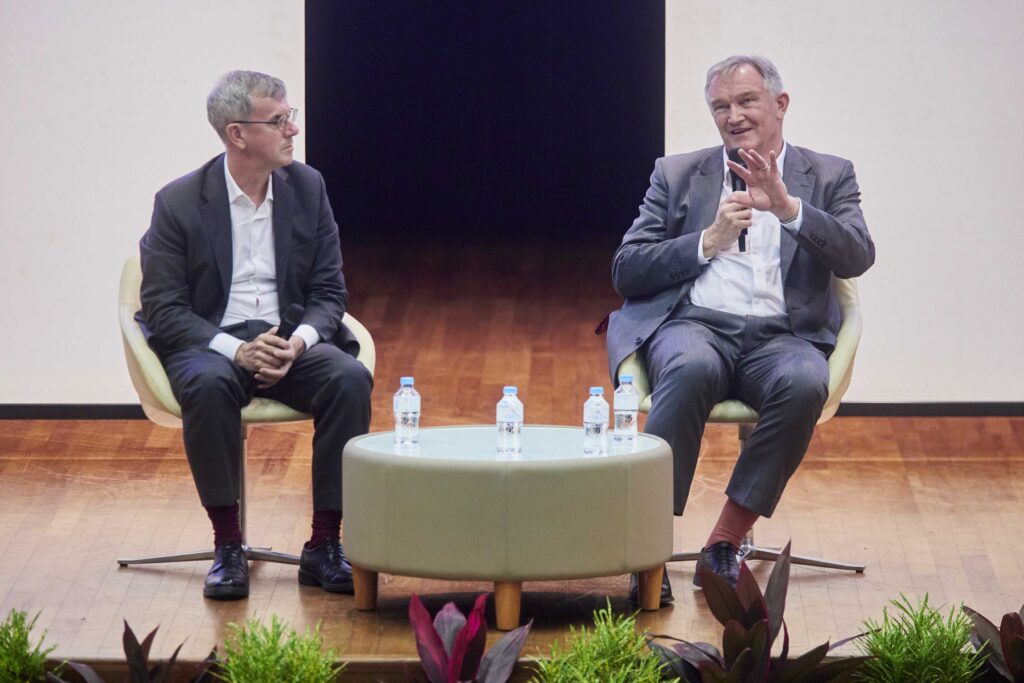
Professor Steven Elliott KC (NUS Law) leading an interactive Q&A session

Associate Professor Tan Zhong Xing (NUS Law) posing a question
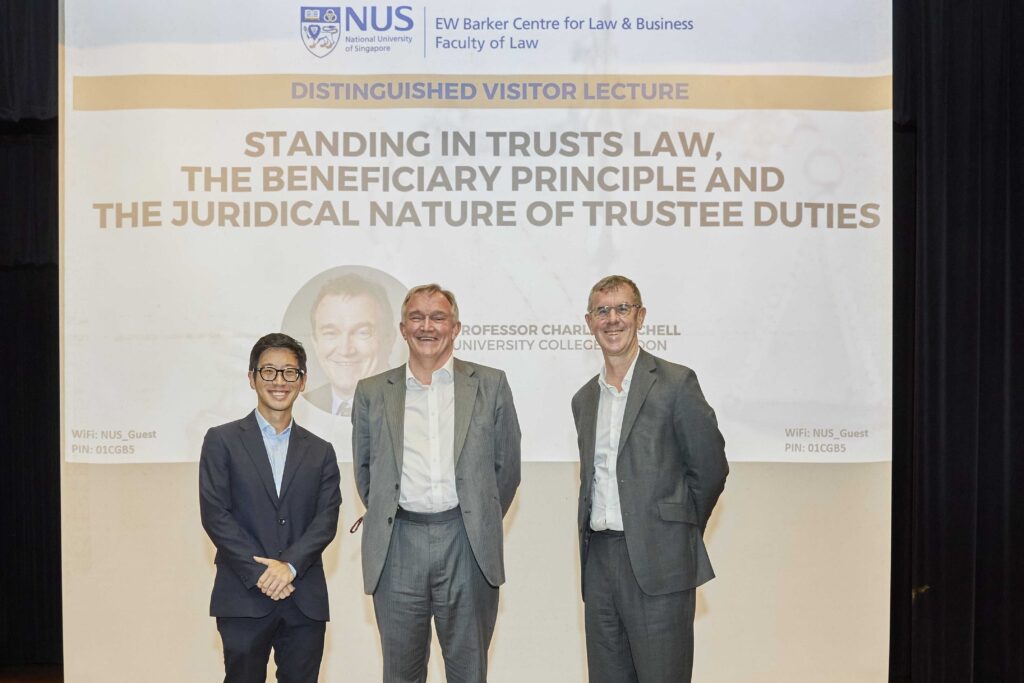
(From left) Associate Professor Tan Zhong Xing (NUS Law), Professor Charles Mitchell (University College London) and Professor Steven Elliott KC (NUS Law)