

Media - News
Corporate Scandals in Asia: Legal and Policy Implications
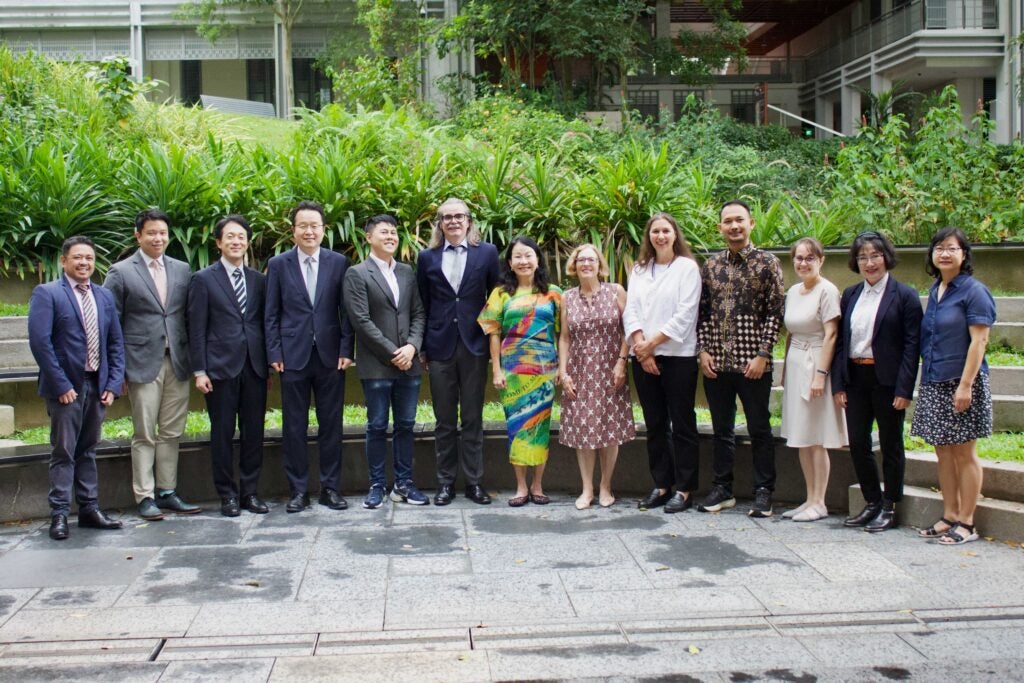
On 11 June 2026, scholars, practitioners and governance experts gathered at the Faculty of Law, National University of Singapore for a conference organised in association with the European Corporate Governance Institute (ECGI), titled Corporate Scandals in Asia and Beyond: Legal and Policy Implications. The conference brought together leading experts to examine corporate failures, governance breakdowns and regulatory responses as part of a major book project to be published by Cambridge University Press in 2027.
The conference explored a central question: why do corporate scandals continue to emerge despite decades of corporate governance reform?
The presentations examined corporate scandals across 12 Asian jurisdictions, namely China, Hong Kong, India, Indonesia, Japan, Malaysia, Philippines, Singapore, South Korea, Taiwan, Thailand and Vietnam. Three additional presentations considered comparative perspectives from Australia, Germany and the United States, providing broader international context for understanding governance failures and reform efforts.
Across the presentations, several recurring themes emerged. The discussions highlighted the gap between formal compliance requirements and effective governance practices, showing that the existence of rules, independent directors and oversight mechanisms does not always prevent misconduct. Contributors also examined how concentrated ownership structures, controlling shareholders and complex relationships between corporations and governments can influence corporate decision-making.
Other key themes included the role and effectiveness of gatekeepers such as auditors, advisers and boards, as well as the challenges of enforcing governance standards in different legal and institutional environments. The presentations demonstrated that corporate scandals are rarely the result of a single failure, but often reflect deeper weaknesses in accountability, transparency and regulatory supervision.
By bringing together comparative legal analysis and country-specific case studies, the conference advanced the research foundation for the forthcoming volume. The book will examine how corporate governance systems respond to major failures and consider how legal frameworks and institutional reforms can better promote accountability, investor confidence and responsible corporate conduct.
The project aims to provide valuable insights for academics, regulators, investors and companies seeking to understand the causes of corporate scandals and the continuing evolution of governance practices across Asia and beyond.