
Media - News
Seminar on the topic “Can Parents Sell Their Children’s Property?”
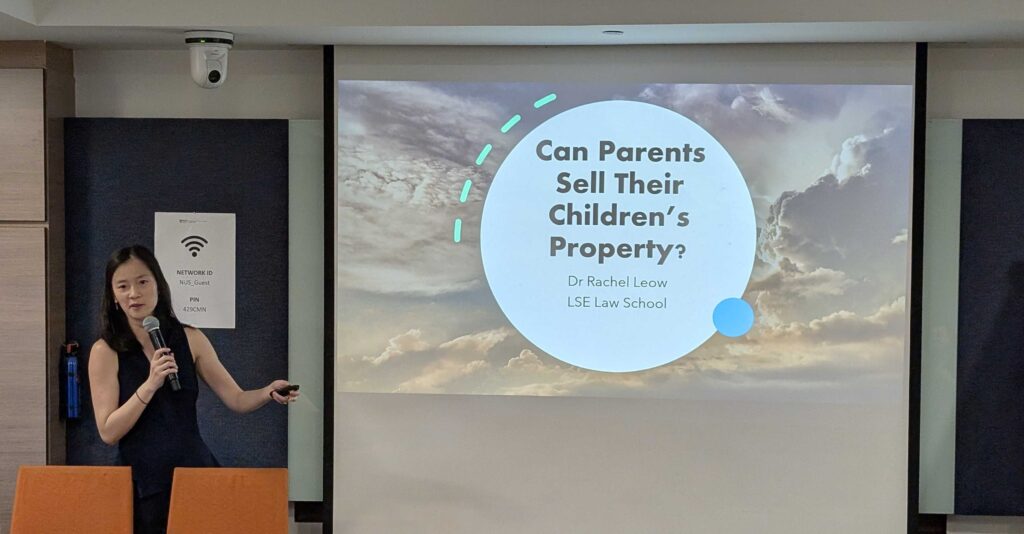
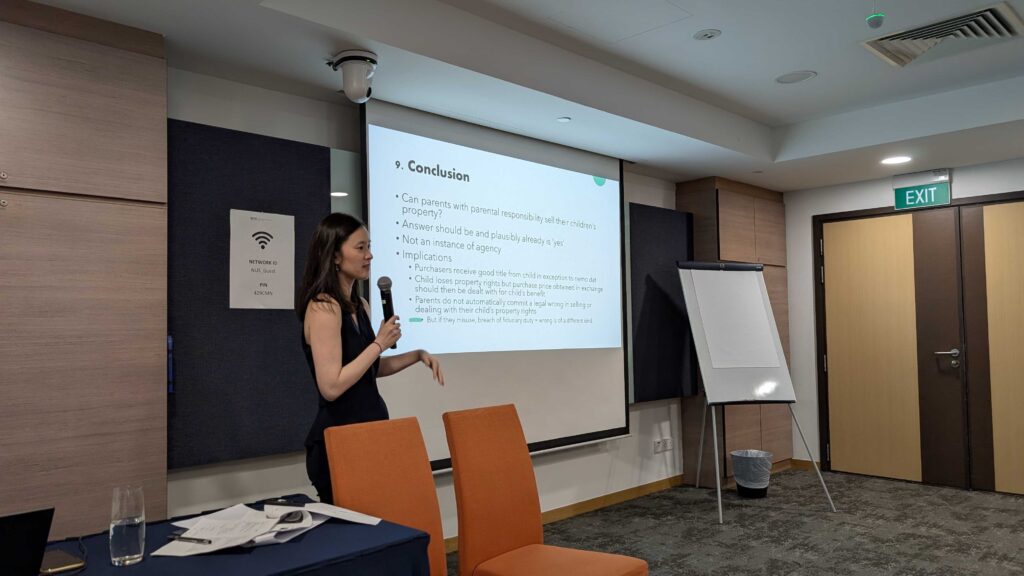
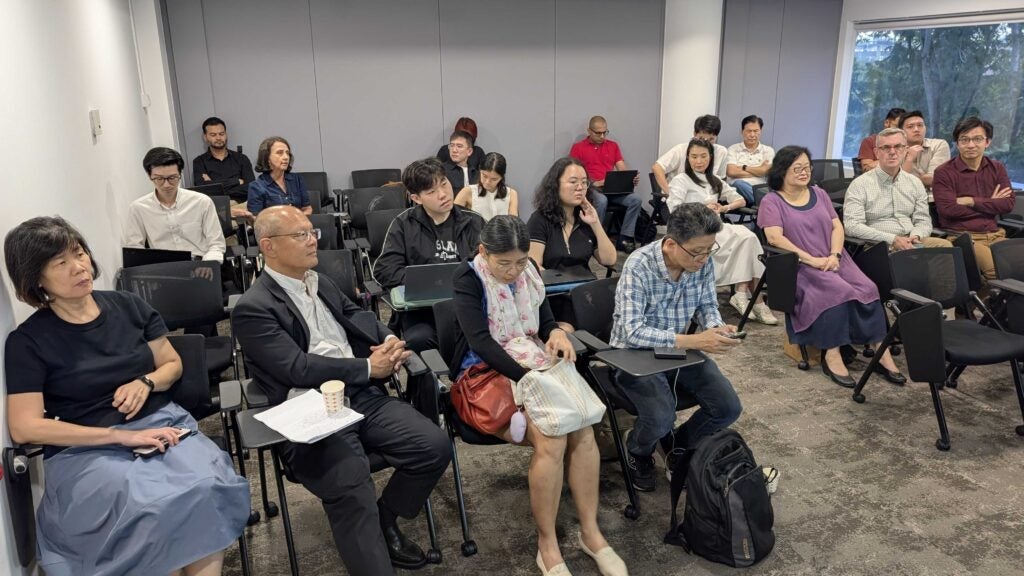
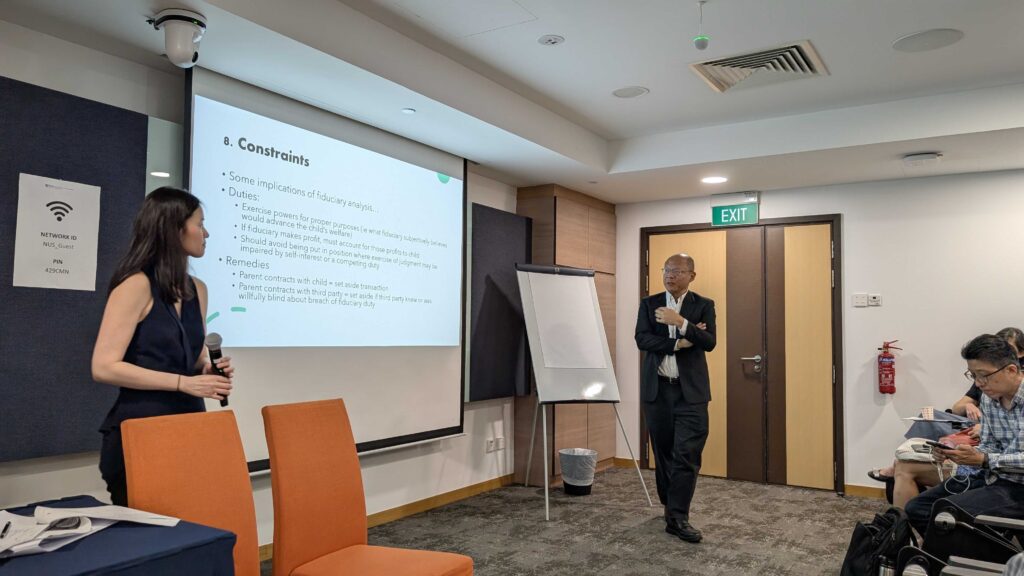
The EW Barker Centre for Law & Business of NUS Law hosted an academic seminar on 4 February 2026 on the question, “Can Parents Sell Their Children’s Property?”. It was delivered by Dr. Rachel Leow, Associate Professor at LSE Law School, and moderated by Professor Hans Tjio. The event brought together academics, researchers, and legal practitioners for a detailed discussion on this complex area of private law.
The seminar focused on English law, beginning with the principle of nemo dat quod non habet, which means one cannot transfer better title than one possesses. At first glance, this seems to prevent parents from selling a child’s property. However, the central argument was that parents with parental responsibility can do so in certain circumstances.
Discussion covered children’s limited legal capacity, the distinction between legal parenthood and parental responsibility, and three possible mechanisms: agency, trusts, and special parental powers. Agency was largely rejected, as English law does not presume it in the parent–child relationship. Attention focused on parental responsibility under the Children Act 1989 and its interpretation in case law.
Participants reviewed the historical development of guardianship and parental powers before and after 1989. They highlighted judicial uncertainty and recent cases that suggest a broader understanding of parental authority. This includes the power to sell immovable property. Such powers are justified when they help parents maintain, protect, and promote the child’s welfare.
The seminar stressed that these powers are not unlimited. Fiduciary duties, welfare considerations, and potential court approval for high-value transactions act as safeguards. Recognising parental powers to sell children’s property, within these limits, provides a coherent and realistic account of modern family and property law.
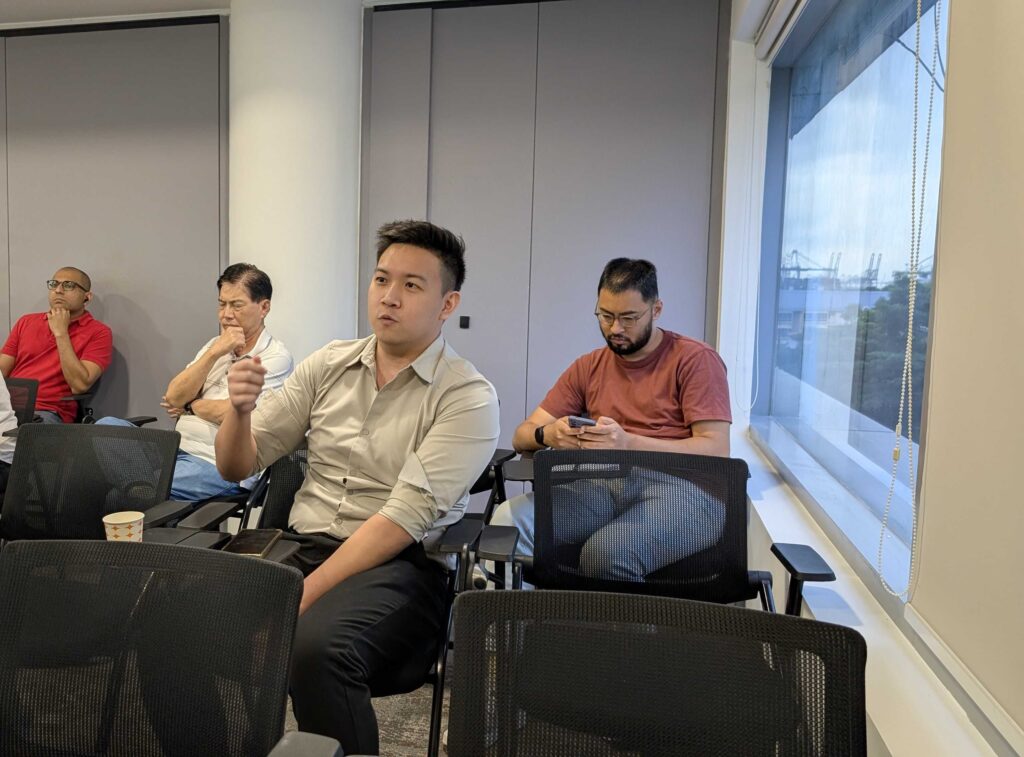
The session ended with a lively Q&A. Participants explored both the legal principles and the practical implications raised during the seminar.